
Articles
8 ways the Kingdom connects us back to the Garden of Eden


When Jesus came as the last Adam (1 Corinthians 15:45), He announced the good news of the Kingdom of God (Mark 1:14). What is the Kingdom of God? The rule of God emanates from the throne of God in Heaven. Hence, the Kingdom of God rules over all of creation (Psalm 22:28; 24:1; 103:19).
Consequently, when Jesus announced that the Kingdom of God was at hand (Matthew 4:17), He declared that restoring the created order back under His rule as it was in the Garden of Eden (before the fall) was now inaugurated.
We see themes relating to the work of restoration to Eden throughout Scripture (Isaiah 11:6-9; 51:3; 65:17-25; Ezek. 36:34-36; Romans 8:19-21; Rev. 21:1-5).
In light of this, we see that the Gospel of the Kingdom of God is related to the reconciliation of the world, not merely to individual sinners (2 Corinthians 5:19).
The following are eight ways the Kingdom of God is connected to the Edenic state.
1. Through work
God’s first act after creating Adam was to put him in a garden to work and keep it (Genesis 2:15). Even before Adam had a family, he worked unto the Lord. (Hence, using our abilities to work is not merely to provide for our family but is an act of worship since we are reflecting Yahweh who worked for the six days of creation.)
Consequently, Paul the apostle commands the Church to work and to be a blessing to others (Ephesians 4:28; 1 Thessalonians 4:11). Paul even declares that if a man does not work, he should not eat! (2 Thessalonians 3:10)
Thus, Christians are called to work and plant the Garden of the Lord as part of our Christian witness that the Kingdom of God is at hand.
2. Through God’s provision
God planted humanity in a lush garden with enough to sustain it even before Adam worked. Humans did nothing to earn what we were born into, yet God provided everything we needed for sustenance through His grace.
Consequently, continuing to receive divine provision is one way the Church manifests the Kingdom of God to the rest of the world.
3. Through holy matrimony
God joined one man and one woman to be “one flesh” as the foundation of civilization (Gen. 2:21-24). Before there was human government, there was marriage. Thus, His Kingdom influence started with biblical marriage.
Also, the fact that God made binary gender to represent His nature implies that it takes both male and female to transmit the image of God to the next generation (Genesis 1:27). Hence, two men and two women cannot fully transmit the image of God to the next generation.
The main reason why Satan distorted biblical marriage with alternative forms of family as well as through the proliferation of pornography and divorce, is to prevent the complete image of God from being transmitted to the next generation.
Consequently, when Christians live faithfully together in holy matrimony and raise their children in the Lord, they plant the Garden of the Lord and manifest His Kingdom in the world.
4. Through defining reality
God brought the animals of the earth to Adam so he could name them (Genesis 2:19-20). As God’s vice-regent, it was up to Adam to name and define reality. Thus, whoever defines a thing can categorize and frame the perspective of that entity.
This is why there is an ideological push to reframe biblical symbols such as the rainbow and to redefine biblical concepts such as marriage, gender, human sexuality, and social justice (Genesis 9:13).
The rainbow symbolizes God’s promise to Noah that He would never again destroy the earth with a flood (Genesis 9:13-17). Today, the rainbow is widely recognized as a symbol of the LGBTQ+ community, representing diversity and inclusion.
Marriage
Historically, marriage has been defined as a union between one man and one woman. Many societies now recognize same-sex marriages and broader definitions of partnerships and unions.
Gender
Gender was traditionally understood as strictly male or female, based on biological sex.
The concept of gender has expanded to include a spectrum of identities beyond the binary male and female, such as non-binary, pansexual and genderfluid.
Woke
The connotation of the traditional meaning had to do with a conversion experience in which a person’s eyes were opened, and they were turned from darkness to light, which is why the term “awakening” was used to describe masses of people coming to Christ (Acts 26:18). Now ”woke” has been hijacked to describe people who ascribe to the far left (woke) ideology. Consequently, the Church is called to function as cultural creatives who define reality for society in a way that aligns with the Kingdom of God.
5. Through cultivation
Adam was called to cultivate the Garden of the Lord and subdue the rest of the earth (Genesis 1:28). Similarly, believers are called to plant systems and create art that reflect the beauty of the Lord as depicted in the Garden of Eden for human flourishing.
6. Through multiplication
As God created the world with the ability for every living thing to multiply (Genesis 1), the Ephesians 4:11 ministry gifts were called to equip people who can multiply biological families, churches, and businesses, so the seeds of the Garden of the Lord will eventually fill all things (Ephesians 4:10-12)
7. Through stewardship
As God called Adam to steward the created order, God has called the church to nurture people capable of managing their families, churches, and businesses and to produce Christ-followers capable of stewarding leadership in society for the glory of God.
8. The ‘tree-centric’ world on the 8th day
The Tree of Life was in the midst of the Garden of Eden (Genesis 2:9). Christ’s death, burial, and resurrection created a “Tree-Centric” world since the cross (tree) of Christ became the Tree of Life that brought healing and reconciliation back to the created order (I Peter 2:24). Since Jesus rose on the 8th day, this also represented new beginnings regarding the process of the renewal of all things.
Consequently, as Christ-followers live a cross-shaped life, they will be His agents of healing that plant the garden of the Lord as an oasis of hope amid broken cities.
Sources:Christian Post











Articles
The Rapture and the Church: Biblical hope and theological perspectives – Awaiting the Return of Christ and the Gathering of His Redeemed People
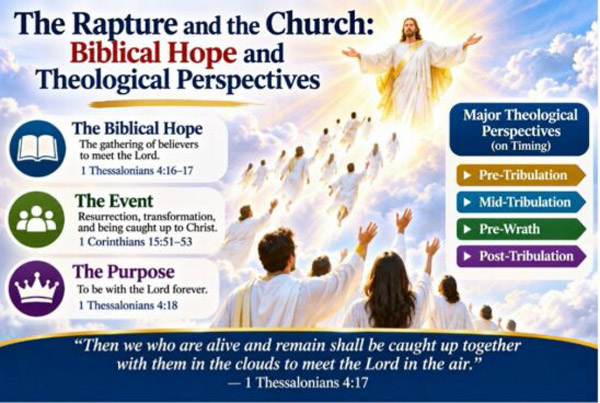
The rapture of the Church is an important doctrine of Christian eschatology, based on the promise of Christ’s return and the gathering of believers into His presence. The New Testament teaches that this glorious event will include the resurrection of the dead in Christ, the transformation of those living at the time, and their gathering together to meet the Lord. Christian traditions differ as to when this will take place in relation to the tribulation and the second coming of Christ, but the core promise of eternal fellowship with the Savior is a bedrock of Christian hope. This article analyzes the biblical basis of the rapture, major theological views, the Pentecostal understanding, and the practical implications of this doctrine to the spiritual readiness, holiness, perseverance, and missionary responsibility of the Church.
Introduction:
The Christian Church exists between the already accomplished redemption of Christ’s first coming and the expected consummation of God’s redemptive purpose at His return. Perhaps one of the most comforting promises given to believers is the promise that Jesus Christ will come again and receive His redeemed people to Himself. Jesus promised His disciples, “I will come again and receive you to Myself; that where I am, there you may be also.” (John 14:3 NKJV). The exact timing and nature of the rapture have been the subject of much theological debate, but the overall theme is one of hope, comfort, and spiritual readiness.
- The Biblical Basis for the Rapture:
The main Bible passage on the rapture is 1 Thessalonians 4:13–18. Paul addresses the fears of believers that their fellow Christians may die before the return of Christ. He assures them that those who have died in Christ will not be excluded from the blessings of His coming. “Then we who are alive and remain shall be caught up together with them in the clouds to meet the Lord in the air” (1 Thessalonians 4:17). The Greek word harpazō, translated as “caught up,” implies a sudden seizure or snatching away. The word “rapture” is a translation of this phrase in Latin. Paul talks about three great realities: the personal descent of Jesus Christ from heaven, the raising of the dead in the Christ, and the gathering of living and resurrected believers to meet the Lord. The passage closes with the glorious assurance that the believers will be with the Lord forever. - The Mystery of Resurrection and Transformation:
Another important text is 1 Corinthians 15:51-53, where Paul reveals the mystery of the transformation of believers. “We shall not all sleep, but we shall all be changed” (1 Cor. 15:51). This transformation will happen in a moment, in the twinkling of an eye. The dead will be raised imperishable, and the living believers will be miraculously changed. And mortality shall put on immortality, and corruptibility shall put on incorruptibility. Philippians 3:20–21 also says that Christ will transform our lowly bodies to be like His glorious body. The rapture is intimately connected with resurrection and glorification. It is the realization of God’s saving purpose for the whole person, including the redemption of the body. - Major Theological Views on the Rapture:
Christians who believe in the future gathering of believers disagree about when this gathering will take place in relation to the tribulation and to Christ’s visible return. (A) The Pre-Tribulation View: The pre-tribulation view is that Christ will gather the Church before a future seven-year tribulation period. Advocates of this view understand the rapture and Christ’s subsequent visible return in glory as two distinct phases of His second coming. Proponents often cite 1 Thessalonians 1:10, 5:9, and Revelation 3:10, emphasizing God’s promise of deliverance from divine wrath. This is a common interpretation within dispensational premillennialism and classical Pentecostalism. (B) The Mid-Tribulation View: This view holds that the rapture occurs roughly in the middle of the seven-year tribulation period. Advocates of this view make a distinction between the earlier period of tribulation and the more intense judgments of the latter half of the period, drawing especially on Daniel 9:27 and Revelation 11 for support. (C) The Pre-Wrath Viewpoint: This view holds that during the tribulation the church will experience great persecution but will be gathered to Christ before the outpouring of God’s eschatological wrath. It distinguishes between persecution against believers and judgment against the rebellious world. (D) The Post-Tribulation View: This view teaches that the church will go through the tribulation and will be gathered to Christ at His visible return. Matthew 24:29–31 and 2 Thessalonians 2:1–4 are frequently cited by supporters. Many historic premillennialists, amillennialists, and postmillennialists understand the gathering of believers as part of one climactic second-coming event rather than a separate earlier event. Despite these differences, all these perspectives affirm the return of Christ and the ultimate gathering of His people. - Pentecostal Perspective on Rapture:
Classical Pentecostal denominations have historically embraced a pre-tribulation, premillennial view of the rapture. In this sense the rapture is Christ’s coming to take His Church before the great tribulation. Then He returns visibly in glory and establishes His millennial reign. Pentecostal spirituality has traditionally stressed the nearness of the return of Christ, spiritual preparedness, the Spirit-filled life, and the necessity of evangelistic witness. The hope of Christ’s coming has been the motive for missions, revival, prayer, and personal holiness. However, Pentecostal believers must make a distinction between the certainty of Christ’s promised return and theological interpretations concerning the specific timing of it. Eschatological conviction should be tempered with biblical humility and respect for fellow Christians. - The Rapture as a Message of Hope and Comfort:
Paul closes his teaching on the gathering of believers with a pastoral exhortation: “Therefore comfort one another with these words” (1 Thessalonians 4:18). The doctrine of the rapture was given not to cause fear or speculation, but to comfort grieving believers. Those who are of Christ cannot be severed by death. The resurrection and gathering of believers promise a glorious reunion in His presence. This promise is a deep encouragement for Christians who are suffering, persecuted, terminally ill or bereaved. Christian hope does not deny the reality of suffering. It asserts that suffering and death will not have the final word. The greatest blessing of the rapture is not even release from earthly troubles but eternal fellowship with Jesus Christ. - The Rapture and Spiritually Readiness:
The expectation of the coming of Christ requires watchfulness and holiness. “Therefore you also be ready, because the Son of Man is coming at an hour you do not expect” (Matthew 24:44). The parable of the ten virgins illustrates the necessity of being spiritually prepared (Matthew 25:1–13). Believers are instructed to develop a true relationship with Christ through prayer, obedience, holiness, and dependency upon the Holy Spirit. John reminds believers that everyone who has this hope purifies himself (1 John 3:3). Spiritual readiness is not found in fear or religious activity, but in true faith in Christ, lived out in faithful discipleship. Not only is the Church to believe the doctrine of the rapture, but also to live in readiness for the return of Christ. - The Rapture and the Mission of the Church:
The Church’s missionary responsibility should be inspired, not dampened, by the coming of Christ. Jesus commanded His followers to disciple all nations (Matthew 28:18–20). Until He comes, the Church must continue to preach the gospel, disciple believers, care for the needy, and demonstrate God’s love. The early Pentecostal movement viewed the outpouring of the Holy Spirit and the expectation of Christ’s imminent return as strong incentives to evangelize the world. But eschatological expectation must never be a pretext for neglect of earthly responsibilities or speculative date-setting. Jesus said that no one knows the day or hour of His coming (Matthew 24:36). The right response is faithful service, not prophetic hysteria.
Summary:
The rapture of the Church is a glorious demonstration of the Christian hope that Jesus Christ will come again, raise the dead in Christ, transform the living believers, and gather His redeemed people into His presence. There are theological differences as to when this will take place, but the core biblical promise is the same: those who belong to Christ will be with Him forever. From a premillennial Pentecostal perspective, the rapture is the much-anticipated gathering of the Church. It offers a compelling impetus for holiness, spiritual vigilance, and missionary commitment. The Church must be Christ-centered in its expectancy, apostolic in its doctrine, Pentecostal in its spiritual vitality, holy in its character, and missionary in its purpose. The real question is not just when Christ will return, but whether His people are living faithfully in anticipation of His return. The hope of the rapture is not primarily about escaping the world but about meeting the Savior. It is not merely about prophetic chronology but about eternal fellowship with Christ. Until that glorious day, the Church continues to worship, witness, serve, and persevere in hope, echoing the prayer of the early Christians: Maranatha—Our Lord, come! “And thus we shall always be with the Lord” (1 Thess. 4:17). Amen!
Sources:maruppacha
There is something about Samuel’s story that feels especially relevant for the Church right now.
Scripture records that during that time, “the word of the LORD was rare in those days; there was no frequent vision” (1 Samuel 3:1).
When Samuel first came on the scene, the house of God was in trouble. Eli’s sons were abusing their priestly position, treating the offerings of the Lord with contempt, and engaging in blatant immorality. The structures of worship were still in place, but something far more important had been lost.
The fear of the Lord was missing.
Scripture tells us that during this same period, “the word of the Lord was rare.” Perhaps these two realities are more connected than we realize.
In a generation filled with information, opinions, messages, and voices claiming to know what God is saying, we are desperate for clarity. But perhaps the answer is not simply more information or even better discernment. Perhaps God is calling us back to the one place where everything else finds its proper order: His presence.
Samuel cherished what others took for granted
In the middle of the corruption surrounding Eli’s house, Samuel was learning to minister before the Lord. Scripture tells us that he was sleeping “in the temple of the Lord, where the ark of God was” (1 Samuel 3:3). The ark represented the place of God’s presence.
While others had become careless with holy things, Samuel was being formed by them. While Eli’s sons used their position for personal gain, Samuel was learning to wait before the Lord.
He cherished what others had taken for granted.
And it was there that God called his name. “Samuel! Samuel!”
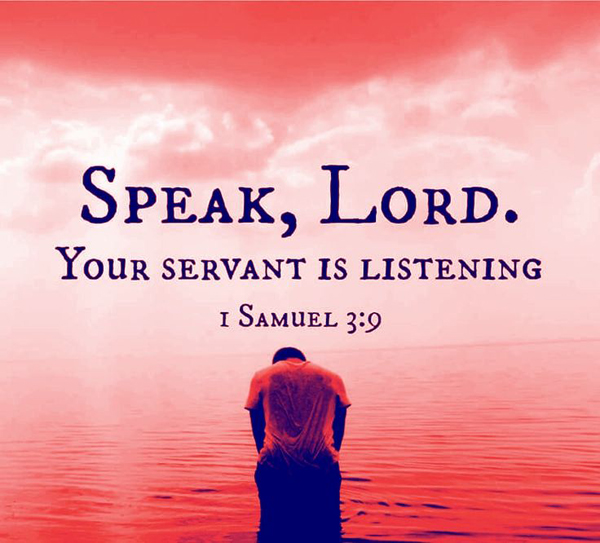
His eventual response would characterize his entire life: “Speak, Lord, for your servant hears” (1 Samuel 3:9).
Something shifted.
Where the Word of the Lord had been rare, God began speaking again. Eventually Scripture records: “And the Lord appeared again at Shiloh, for the Lord revealed himself to Samuel at Shiloh by the word of the Lord” (1 Samuel 3:21).
Then the Lord appeared again.
Samuel changed the storyline, not because he was chasing revelation, but because he was pursuing God. In an atmosphere polluted by compromise, he revered something higher and far more powerful than the allure of sin. He treasured the presence of the Lord.
And from that hidden place, the fear of the Lord began to return.
The fear of the Lord is formed in His presence
This pattern continues throughout Scripture.
Isaiah did not begin with a message. He began with an encounter: “I saw the Lord sitting upon a throne, high and lifted up” (Isaiah 6:1).
Standing before the holiness of God changed Isaiah’s perspective of everything — including himself. “Woe is me!” was his immediate response. Before he received a commission, he experienced conviction and cleansing. Only then did he hear, “Whom shall I send?”
Jeremiah reveals the same priority when God confronts the false prophets: “For who among them has stood in the council of the Lord to see and to hear his word?” (Jeremiah 23:18).
And then: “But if they had stood in My council, then they would have proclaimed My words to My people, and they would have turned them from their evil way” (Jeremiah 23:22).
God’s indictment was not simply that these prophets had spoken incorrectly.
They had not stood in His council. They were speaking without first standing before Him.
This principle applies far beyond prophetic ministry. If we want to hear God clearly, discern His purposes, understand His Word, and represent Him faithfully, we must learn to stand in His presence. The fear of the Lord cannot be manufactured through religious activity. It comes when we actually encounter the holiness, majesty, goodness, and authority of God. When we see Him rightly, everything else is brought into perspective.
We need more than the removal of Eli’s sons
There has been necessary exposure and cleansing taking place in the Body of Christ. But removing the “sons of Eli” is only part of the answer.
God must raise up the Samuels.
The Church needs men and women who love His presence more than platforms, His approval more than recognition, and His voice more than the opinions of the crowd. Not simply prophets.
Believers. People who have learned to tend the altar when no one is watching. People who enter the secret place not merely to get an answer, receive a revelation, or obtain direction, but because they want to know God Himself.
From the beginning, God’s desire has been to dwell among His people: “And let them make Me a sanctuary, that I may dwell in their midst” (Exodus 25:8).
His presence was always the priority. And when Israel wandered from Him, God sent prophets not merely to provide supernatural information, but to call His people back to Himself.
That was Samuel’s message: “If you are returning to the Lord with all your heart … direct your heart to the Lord and serve Him only” (1 Samuel 7:3).
The man who had learned to dwell in God’s presence was now calling an entire nation back to Him. That is what the fear of the Lord does. It turns our attention away from ourselves, our idols, our ambitions, and our distractions and puts God back in His rightful place.
The weight of His presence
Centuries after Samuel’s death, God still remembered him alongside Moses as one who could “stand before” Him on behalf of the people (Jeremiah 15:1).
That says something significant about Samuel’s legacy. Yes, Samuel heard God accurately. Scripture tells us the Lord “let none of his words fall to the ground” (1 Samuel 3:19). But Samuel was remembered for more than accurate words.
He had learned to stand before God
His authority was not merely in what he said. There was a weight on his life that had been formed in the presence of the Lord. This may be one of the greatest needs of the Church in this hour.
We have many words. We have endless information. We have gifted communicators, influential platforms, and immediate access to countless sermons, teachings, predictions, and opinions.
But where is the weight? Where is that unmistakable evidence of someone who has been with God?
There is purity, sobriety, and a holy restraint that comes from His presence. There is a fear of the Lord that cannot be manufactured through charisma, gifting, education, or eloquence. It is formed when someone has spent enough time before God to remember who He is — and who we are not.
This should certainly mark those who claim to speak prophetically. But it should also mark pastors, teachers, parents, business leaders, public officials, and every follower of Jesus. Before we concern ourselves with speaking for God, we must learn to stand before Him.
A call back to the altar
If the fear of the Lord is going to return to the Church — and ultimately impact our nation — it must begin with a people who return to His presence. This will not happen primarily through another conference, strategy, platform, or public campaign. It begins in hidden places where believers shut out the noise and turn their attention toward God.
May God raise up a generation with the heart of Samuel — those who cherish the secret place, tremble at His Word, honor His holiness, and wait before Him long enough to know His heart.
Perhaps then a watching world will encounter something it desperately needs: A people who have truly been with God.
Sources:Christianpost

Now, I’ll bet that the vast majority of you reading this think that you made a personal decision — all on your lonesome — to receive Christ, and once done, you were a child of God in the faith. John Chipman believes this, as evidenced by his article, “Which comes first in salvation order: Faith or regeneration?”
He says, “Faith precedes regeneration. Always. For everyone.”
Many think that the reverse is heresy and short-circuited. Still, I’m going to ask you to give me a few moments to make a case for the position of regeneration (the Spirit’s supernatural work of giving spiritual life to us, transforming the heart, and enabling faith, so that we become a new creation in Christ), preceding faith. I used to believe the reverse in my earlier Christian walk, but am now convinced that we can’t make that move of commitment towards God until He enables us to do it.
And few things glorify God more than that truth.
It’s not you, it’s Him
R. C. Sproul was just like me. In a short article, he reflects back on getting his theological bell rung by one of his seminary professors who taught regeneration precedes faith, saying, “These words were a shock to my system. I had entered seminary believing that the key work of man to effect rebirth was faith. I thought that we first had to believe in Christ in order to be born again.”
But Sproul got a crash course on the topic and ended up becoming one of the staunchest defenders of regeneration coming before faith. What turned him around?
First and foremost was the biblical teaching of our moral inability to choose God. Simply put, Scripture says we can’t believe and have faith in God until He acts first on our behalf.
This is why Jesus said: “I have said to you, that no one can come to Me unless it has been granted him from the Father” (John 6:65) highlighting our lack of moral power to choose God, and why Christ also showed a distinction between those granted faith and those not when He said: “To you it has been granted to know the mysteries of the Kingdom of Heaven, but to them it has not been granted” (Matt. 13:11).
It’s also why Paul writes, “You were dead in your trespasses and sins” (Eph. 2:1), indicating everyone’s initial dead-to-God spiritual state. He goes on to write elsewhere: “For the mind set on the flesh is death, but the mind set on the Spirit is life and peace, because the mind set on the flesh is hostile toward God; for it does not subject itself to the law of God, for it is not even able to do so” (Rom. 8:6–7) and “But a natural man does not accept the things of the Spirit of God, for they are foolishness to him; and he cannot understand them, because they are spiritually appraised” (1 Cor. 2:14).
If a person’s natural mind is not able to subject themselves to God, thinks “the things of God” are so foolish to the point where they “cannot understand them,” can you tell me how they’re able to pull themselves up by their own bootstraps, muster up faith that isn’t there, and receive Christ?
Augustine saw this inescapable predicament and ruffled many feathers back in his day when he summed up Christ and Paul’s points in this short written prayer: “Grant what thou commandest, and command what thou dost desire.” The second part none of his contemporaries had trouble with, but the first statement? He got the same dirty looks from them that we, who believe God must first grant us the ability to trust Him, do today.
Augustine and those holding to regeneration preceding faith acknowledge that people have free will but lack spiritual liberty when it comes to exercising our will towards God. Our initial state is one where we’ve not lost the ability to make choices — it’s just the choices are bad where God is concerned, meaning you can’t exercise faith and choose God without Him enabling you first.
Martin Luther takes this position when he writes: “Free will without God’s grace is not free at all, but is the permanent prisoner and bondslave of evil, since it cannot turn itself to good.”
Jonathan Edwards describes it like this: “Hence the work of the Spirit of God in regeneration is often in Scripture compared to the giving of a new sense, eyes to see, ears to hear, unstopping the ears of the deaf, opening the eyes of them that were born blind, and turning from darkness unto light…[it] is compared to raising the dead, and to a new creation.”
Which is exactly what the Greek word “regeneration” means “new genesis,” a “coming back from death to life.” This being true, faith is understood as the fruit of regeneration, not the cause of it.
So, given all the biblical evidence that speaks to our moral inability to exercise faith in God on our own, doesn’t it become fairly difficult to believe that some of us just muscle through, overcome our spiritual deadness, and choose God on our own? We figure it all out where others don’t?
And thus, even the weeniest bit of credit for our salvation goes to us in choosing it?
Nope. Instead, we see Christ affirming the proactive work of the Holy Spirit in bringing about our faith when He says: “The wind blows where it wishes and you hear the sound of it, but do not know where it comes from and where it is going; so is everyone who is born of the Spirit” (John 3:8). John says the same thing earlier in his Gospel when he references believers as those “who were born, not of blood nor of the will of the flesh nor of the will of man, but of God” (John 1:13).
That’s pretty clear, wouldn’t you say? Your faith and new birth are not “of the will of man, but of God.” In other words, it’s not you, but Him, where your faith is concerned.
Or as Paul wrote, any faith we have “is not your own doing; it is the gift of God” (Eph 2:8). He underscores this again and again, telling us: “When you were dead in your transgressions and the uncircumcision of your flesh, He made you alive together with Him, having forgiven us all our transgressions” (Col. 2:13, my emphasis) and “For to you it has been granted for Christ’s sake, not only to believe in Him, but also to suffer for His sake” (Phil. 1:29, my emphasis).
These truths are why Martin Luther and Jonathan Edwards referred to their books on this topic (Luther: Bondage of the Will; Edwards: Freedom of the Will) as their most important works. And why I’m laboring hard on this point, where the regeneration preceding faith debate is concerned. If you’re spiritually dead and morally unable to choose God as Scripture says, regeneration has to precede faith.
In the end, I do agree with one thing John Chipman wrote in his article: “…if we get this wrong, we start down a path that leads to an unbiblical god and a hopeless corruption of the Gospel.”
Good advice.
To avoid that, remember two things:
First, He chose you before you chose Him, just as Jesus said: “You did not choose Me but I chose you, and appointed you that you would go and bear fruit, and that your fruit would remain” (John 15:16).
Second, as much as we’d like to think we’re always on the same wavelength as God on these weighty matters, sometimes His way of doing things doesn’t jive with our human logic. As He says in the Psalms: “You thought I was just like you” (Ps. 50:21).
Give all this some prayerful thought and see if you don’t come around to embracing regeneration preceding faith.
Sources:Christianpost


Massive Christian Cathedral Unearthed in Sudan Reveals Forgotten Kingdom of Faith
The sands of Sudan are revealing an extraordinary piece of Christian history, and what archaeologists are uncovering could change how...


Donnie Wahlberg Brought to Tears While Worshiping Jesus: ‘My Identity Is in Him’
Actor and pop star Donnie Wahlberg has been sharing more heartfelt moments from his newfound journey with Jesus, publicly giving...

കാൻബെറ പെന്തക്കോസ്തൽ ചർച്ച് 21 ദിവസ ഉപവാസ പ്രാർത്ഥന നവം.30 മുതൽ
ആസ്ട്രേലിയ: കാൻബെറ പെന്തക്കോസ്തൽ ചർച്ചിന്റെ ആഭിമുഖ്യത്തിൽ നവംബർ 30 മുതൽ ഡിസംബർ 20 വരെ 21 ദിവസ ഉപവാസ പ്രാർത്ഥന നടക്കും. പാസ്റ്റർമാരായ കുര്യൻ തോമസ്, തോമസ്...
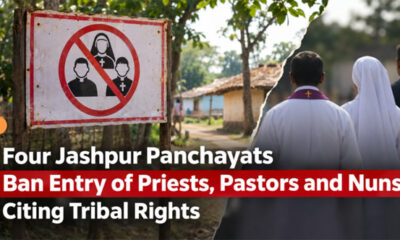

‘പാസ്റ്റർമാർക്കും കന്യാസ്ത്രീകൾക്കും പ്രവേശനമില്ല’; ഛത്തീസ്ഗഢിലെ ഗോത്രഗ്രാമങ്ങളിൽ ബോർഡുകൾ സ്ഥാപിച്ചു; പിന്തുണച്ച് ബിജെപി എംഎൽഎയും
റായ്പുർ: ക്രിസ്ത്യൻ പുരോഹിതർക്കും പാസ്റ്റർമാർക്കും കന്യാസ്ത്രീകൾക്കും പ്രവേശന വിലക്ക് ഏർപ്പെടുത്തി ഛത്തീസ്ഗഢിലെ ഗോത്രഗ്രാമങ്ങൾ. ഛത്തീസ്ഗഢിലെ സോഗ്ര, ഛഡിയ, ദുമാർതോളി, ടെമ്പു ഗ്രാമങ്ങളിലും ഏറ്റവുമൊടുവിൽ ജബ്ല ഗ്രാമത്തിലുമാണ് പാസ്റ്റർമാർക്കും...
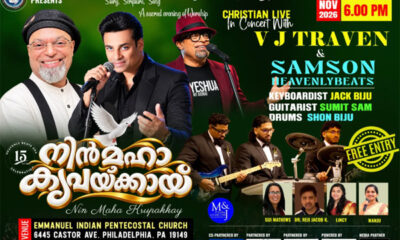

നിൻ മഹാ കൃപയ്ക്കായ്’ ക്രിസ്തീയ സംഗീതസന്ധ്യ ഫിലഡൽഫിയയിൽ
ഫിലഡൽഫിയ: ഹെവൻലി ബീറ്റ്സ് യുഎസ്എയുടെ ആഭിമുഖ്യത്തിൽ ‘നിൻ മഹാ കൃപയ്ക്കായ്’ ക്രിസ്തീയ സംഗീതസന്ധ്യ നവംബർ 30 തിങ്കളാഴ്ച വൈകിട്ട് ആറിന് ഫിലഡൽഫിയയിൽ നടക്കും. ക്രിസ്തീയ സംഗീതരംഗത്തെ ശ്രദ്ധേയനായ...
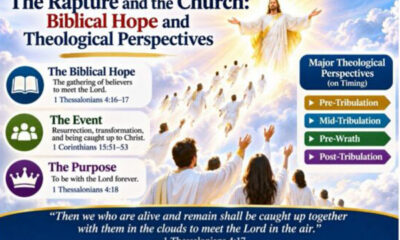

The Rapture and the Church: Biblical hope and theological perspectives – Awaiting the Return of Christ and the Gathering of His Redeemed People
The rapture of the Church is an important doctrine of Christian eschatology, based on the promise of Christ’s return and...
-
 us news3 weeks ago
Millions Encouraged to Open Their Bibles for Global Bible Month
-

 us news6 months ago
Mike Winger deletes YouVersion app over ‘The Passion Translation’ controversy, urges others to ‘use caution’
-
 us news6 months ago
‘America Is Hungry’: Hundreds Born Again and Baptized as Jesus Tent Revival Sweeps the Nation
-

 Movie10 months ago
Hollywood Actor Jen Lilley Launching New Ministry After ‘Vision’ From Holy Spirit
-
 world news12 months ago
പാകിസ്ഥാനിൽ പാസ്റ്റർ കമ്രാൻ മൈക്കിൾ തന്റെ മകളുടെ മുന്നിൽ വെച്ച് ക്രൂരമായി കൊല്ലപ്പെട്ടു.
-

 Travel11 months ago
കേരളത്തിൽ നിന്ന് ഭൂട്ടാനിലേക്ക് എങ്ങനെ ട്രെയിനിൽ പോകാം; വിസ വേണ്ട, വോട്ടർ ഐഡി മതി; ടിക്കറ്റ് നിരക്കും വഴികളും
-

 Movie9 months ago
Worship Leader Brooke Ligertwood Shares Stunning Testimony of Answered Prayer From Ukraine
-
 world news9 months ago
Arrests of Yemeni Christians Demonstrate a Growing Faith