
us news
Divorce and remarriage: What does the Bible say?


Divorce and remarriage remain some of the most challenging and sensitive topics within the Church today. While modern culture has become increasingly permissive regarding the dissolution of marriage, Scripture upholds a high view of the marriage covenant.
We are conditioned to view marriage as disposable. We receive these messages through public figures such as popular actors and actresses, celebrities, and even politicians. However, Jesus’ teaching in Luke 16:18 provides a sobering warning:
“Everyone who divorces his wife and marries another commits adultery, and he who marries a woman divorced from her husband commits adultery.”
These words underscore the permanence of marriage and rebuke the widespread misinterpretation of God’s law by the Pharisees. To fully understand what Scripture teaches about divorce and remarriage, we must examine the historical context, the biblical framework, and the theological implications of Jesus’ words.
The Pharisees’ perversion of divorce and remarriage
During Jesus’ ministry, the Pharisees had established themselves as interpreters and enforcers of the Mosaic Law. However, they often distorted the law to fit their own desires. In many ways, the Pharisees revised the law of God to be reshaped in their image. The issue of divorce was no exception. They had developed an overly permissive view that allowed men to divorce their wives for nearly any reason. Their misinterpretation was based on a skewed reading of Deuteronomy 24:1-4, which they used to justify easy divorce.
The primary debate among Jewish scholars revolved around the phrase “some indecency” (ervat davar) in Deuteronomy 24:1. Two prominent rabbinical schools, the School of Shammai and the School of Hillel, had different interpretations:
The school of Shammai held a strict view, permitting divorce only in cases of sexual immorality.
The school of Hillel took a more liberal stance, allowing divorce for almost any reason, including trivial matters such as a wife burning food or becoming less attractive.
This debate formed the backdrop of the Pharisees’ question to Jesus in Matthew 19:3, where they asked, “Is it lawful to divorce one’s wife for any cause?” In Matthew 19, the Pharisees were seeking to trap Jesus. They wanted him to either teach in contradiction to the Mosaic Law or to uphold it to the point that Herod would do to Jesus what he did to John the Baptist. Jesus confronted them by asking if they had not read — implying that they had apparently read Rabbi Hillel rather than God’s law!
God’s original design for marriage
Marriage is foundational to God’s creation order. In Genesis 2:24, we see the first divine institution of marriage:
“Therefore a man shall leave his father and his mother and hold fast to his wife, and they shall become one flesh.”
From the beginning, marriage was intended to be a permanent, covenantal union. This covenant reflects God’s own faithfulness and love, particularly as it relates to Christ’s relationship with the Church (Ephesians 5:31-32). Jesus affirms this divine institution in Matthew 19:4-6, stating, “What therefore God has joined together, let not man separate.” This statement directly contradicts the Pharisees’ approach to divorce and underscores the seriousness of breaking the marriage bond.
Biblical allowances for divorce
Though God’s ideal is lifelong marriage, Scripture does provide two explicit grounds for divorce: sexual immorality and willful desertion by an unbelieving spouse.
The exception clause: Divorce for sexual immorality
Jesus provides the clear and explicit exception for divorce in Matthew 19:9, “Whoever divorces his wife, except for sexual immorality, and marries another, commits adultery.” The Greek word for sexual immorality here is porneia, a broad term encompassing various forms of sexual sin, including adultery, fornication, and other violations of marital faithfulness.
The Pharisees had misrepresented Deuteronomy 24:1 as a justification for no-fault divorce, but Jesus clarifies that only serious marital unfaithfulness constitutes legitimate grounds for divorce. However, even in such cases, divorce was permitted but not commanded. Before rushing through the doorway of divorce, reconciliation should always be pursued if possible.
The desertion clause: Divorce due to abandonment
The Apostle Paul provides another legitimate ground for divorce in 1 Corinthians 7:15, “If the unbelieving partner separates, let it be so. In such cases the brother or sister is not enslaved. God has called you to peace.” This refers to an unbelieving spouse who chooses to leave a believing partner. In such cases, Paul states that the believing spouse is no longer bound to the marriage. In such cases, the abandoned spouse is free to remarry. This is concluded by the language Paul uses in the text that suggests that the innocent party is not “enslaved” to the spouse who abandoned them.
In many ways, this serves as protection from abusive spouses who would keep their spouse under marital obligation after abandonment — treating them as property to be used rather than a spouse under a marriage covenant. In similar ways, the text in Deuteronomy protected women from that type of abuse in the Old Testament where men of Israel would leave their wives and take Gentile women leaving their wives vulnerable and with no legal support that their marriage had been severed. The giving of a bill of divorcement was a means of protection.
Remarriage after divorce
Often, one of the most controversial issues to reconcile is centered on remarriage. Can a person be remarried if they’ve been divorced? If a person has been divorced on biblical grounds, is remarriage permissible? This must always be considered on a case-by-case basis through the lens of Scripture. In some cases, it may be that a person has engaged in a sinful divorce and should be given the counsel that they should remain single. In other cases, a Christian may be counseled that remarriage is an option.
The majority of Reformed theologians have affirmed that remarriage is allowed for the innocent party. Theodore Beza, the successor of John Calvin, affirms:
“We do not allow divorce except for two causes: namely, adultery and malicious desertion. Both of these dissolve the bond of marriage. And when this happens, we say that it is lawful for the innocent party to remarry.”1
In a similar manner, William Perkins writes the following as he stands in the long line of the Reformers and their position on the issue of divorce and remarriage.
“In the case of adultery, the bond of marriage is broken, and the innocent party has liberty to remarry.”2
Thus, if a person has been divorced due to sexual immorality or desertion, remarriage is a legitimate option for the innocent party. Given the high view of marriage in Scripture, the church has a responsibility to uphold the sanctity of marriage. The church also bears the responsibility of ministering to those who have suffered through divorce.
1. Church accountability and discipline
Marriage is a covenant before God, and churches should be actively involved and engaged in marriage. If anyone should be upholding the holiness of marriage, it should be the church of Jesus Christ. Members of the local church should not view marriage as a private decision or a family matter that is disconnected from the local church. In other words, the local church should be far more engaged in marriages than merely guests at a celebration.
Premarital counseling should be engaged to prevent hasty or unwise marriages and prepare couples for marriage.
Church discipline should be applied in cases of sin and unbiblical divorce.
Encouraging reconciliation should be the common counsel from the beginning when sin threatens a marriage.
Shepherding for successful marriages should be the goal of regular ongoing pastoral ministry within the local church.
2. Grace for the divorced
For those who have divorced sinfully, God’s grace abounds. The Gospel assures us that no sin is beyond the reach of Christ’s redemption.
1 John 1:9 — “If we confess our sins, he is faithful and just to forgive us our sins.”
Romans 8:1 — “There is therefore now no condemnation for those who are in Christ Jesus.”
Divorce is not an unpardonable sin. Those who repent and seek Christ’s grace will find restoration and renewal. The local church should not view members who have divorced to be branded with a “scarlet D” and treated as second-rate church members. Furthermore, Christians who come to the conclusion that their divorce and subsequent remarriage were unbiblical should not be gripped by the false idea that they are engaged in perpetual adultery for life. They are to be encouraged to run to the cross where they receive forgiveness and assurance in the finished work of Jesus! We are reminded of this truth in the hymn, “It Is Well With My Soul” penned by Horatio G. Spafford:
“My sin oh, the bliss of this glorious thought!
my sin, not in part, but the whole,
is nailed to the cross, and I bear it no more;
praise the Lord, praise the Lord, O my soul!”
Marriage is a divinely instituted covenant that reflects Christ’s love for His Church. While divorce is permitted in limited circumstances, it should never be taken lightly. As a Church, we must uphold the sanctity of marriage while extending grace and support to those who have experienced its brokenness.
Ultimately, Christ is the true and faithful bridegroom, whose love and commitment to His people never fail. May we, as His followers, seek to reflect that same faithfulness in our own marriages for the glory of our great God.
Sources:Christian Post






us news
Christian Pilot Who Prayed Lord’s Prayer Before Fatal Florida Plane Crash Remembered for Powerful Faith
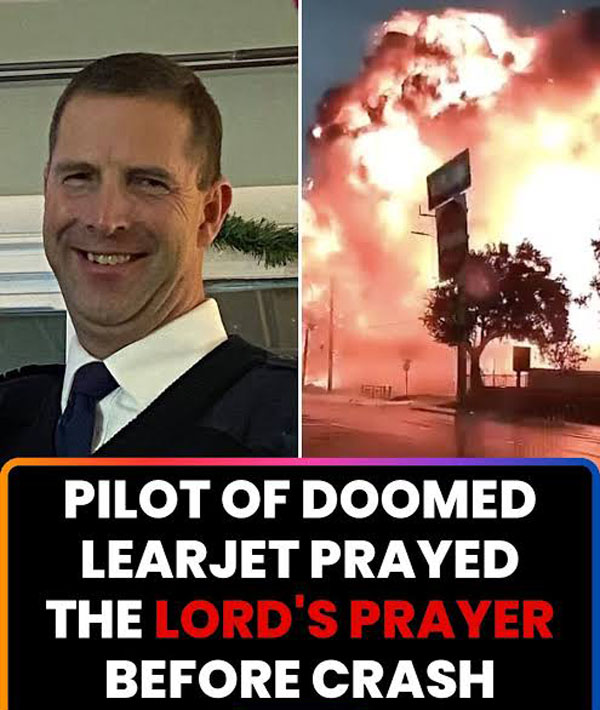
The heartbreaking final moments of a Florida plane crash that claimed nine lives have taken on an even deeper significance as new details emerge about the Christian pilot who reportedly turned to prayer before the aircraft plunged to the ground.
Capt. Jeff Gregory, 55, was a devoted Christian and a member of Limerick Chapel in Pennsylvania, according to the New York Post. Gregory was piloting the Learjet 60 that crashed Sunday, Nov. 1, in Palm Beach County, Florida, killing everyone aboard.
As the aircraft descended rapidly, Gregory was reportedly heard reciting the Lord’s Prayer while his 20-year-old co-pilot, Nathalia Gadelha Filgueiras, desperately communicated the unfolding emergency.
Now, the church Gregory called home remembers him not only for his life but also for the eternal hope found in Jesus Christ.
According to the Post, Limerick Chapel notified congregants of Gregory’s death, saying he “went home to be with the Lord when the plane he was flying crashed.”
Gregory’s connection to the church ran deep; both his parents had worked there. He leaves behind his wife, Cheryl, and their three children.
Longtime friend and former neighbor David Peters told The Sun that Gregory had dreamed of becoming a pilot since childhood.
“I know he worked hard to become a pilot and it was something he truly loved and poured his life and heart into,” Peters said.
Peters also remembered Gregory as a diligent and dependable man who took pride in his aviation career.
The devastating crash claimed eight other lives, including Filgueiras and Texas technology entrepreneur Adam Robinson, his wife, Helen Sharp, and their two young children, Emma, 4, and Charlie, 2. Also killed were Rachael Reed, Charmi Fehr and caregiver Anita Maria Cetina.
According to Fox News, the aircraft was traveling from Austin, Texas, to the Bahamas when the crew encountered icing and moderate turbulence. Federal investigators are examining weather conditions and preliminary evidence that the aircraft began breaking apart before impact.
As the families and friends of these nine victims face unimaginable grief, Gregory’s church is remembering a man whose faith was reportedly present even in life’s most terrifying moments. During this time, lift up in prayer all those heartbroken by this tragedy.
Sources: Breaking Christian News
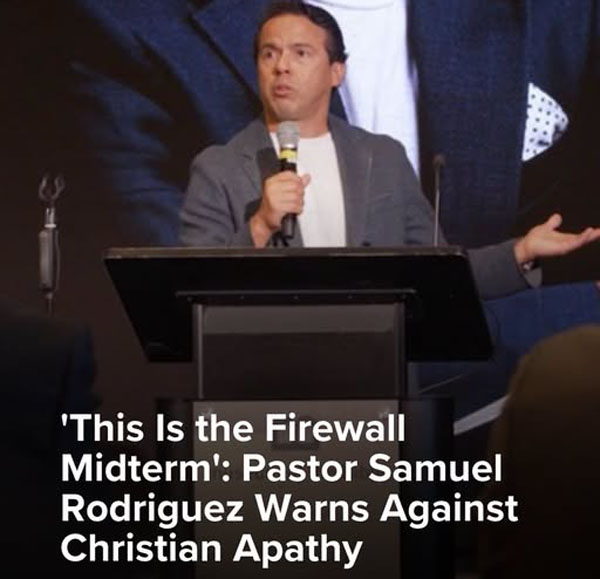
At the National Hispanic Christian Leadership Conference’s 25th Anniversary Summit, faith leaders delivered a pointed message about the upcoming midterm elections: Christians must not remain on the sidelines.
Centered on what organizers called the “Lamb’s Agenda,” the summit emphasized unity around faith, family, freedom, and biblical justice. Speakers urged believers, especially Hispanic Christians, to see civic engagement as a moral responsibility.
NHCLC President Pastor Samuel Rodriguez warned that cultural and political trends unfolding in Europe could eventually take hold in the United States if people of faith do not act.
“There is a legitimate concern of what’s taking place in Europe,” Rodriguez said. “That reality will become our reality unless we build a firewall. This is the firewall midterm.”
Rodriguez described the stakes in stark terms, arguing that America could face growing instability and a deeper rejection of its Judeo-Christian foundation if Christians become disengaged.
“What’s next for America? Chaos, anarchy, socialism, communism, uber-wokeism, cancel culture on steroids, antisemitism continues to grow; a complete repudiation of our Judeo-Christian system,” he said. “That’s what’s next.”
Throughout the summit, Rodriguez repeatedly challenged pastors to confront apathy from the pulpit and to teach biblical principles related to civic duty and public life.
“There’s no such thing as complacent Christianity,” he said. “Today’s complacency is tomorrow’s captivity. Comfortable Christianity, kumbaya Christianity; we are what we tolerate.”
He also argued that political and cultural disengagement carries real consequences, pointing to his home state of California as an example of what can happen when churches fail to speak into public issues.
“This idea we don’t want to get involved in the political reality, the cultural reality,” Rodriguez said. “I live in California… I can demonstrate and show you what happens when apathy takes place in the pulpit; legislative initiatives that jeopardize my children and my children’s children.”
Rodriguez said the church itself must serve as the nation’s moral “firewall.”
“What’s the firewall? Is it a political movement? It’s the Church of Jesus Christ,” he said. “The church is the firewall.”
The summit also touched on politics and the Hispanic vote. Rodriguez acknowledged that while former President Donald Trump made significant gains among Hispanic and Latino voters in 2024, support has since softened among some because of dissatisfaction with immigration enforcement and deportation policies.
“Many of them have fallen away because of what they perceived or what they saw as ICE tactics,” Rodriguez said. “So there has been a downsizing of that support… to roughly 27 to 30 percent.”
Even so, Rodriguez praised Trump’s record on religious liberty, saying he believes the president has done more than any other to protect pastors’ ability to preach freely.
“He is fully cognizant of the reality out there,” Rodriguez said. “I don’t know of any other president… that has done more good as it pertains to a Christian pastor’s ability to preach the gospel without any hesitation.”
Other pastors at the summit echoed the call for greater Christian influence in American public life.
“We need to influence the American culture to remain in the Bible,” said Pastor Samuel Ruiz, pastor of Winter Park Christian Church in Colorado.
“And number two, to collaborate as a church with the political environment and development of this nation so that we remain, in my opinion, conservative.”
His wife and Co-Pastor Dalia Ruiz added that voting should be guided by biblical conviction. “If we vote according to the Bible, then we’ll keep a good foundation in the country,” she said.
Despite concerns about the cultural and political direction of the country, Rodriguez ended on a note of hope, expressing confidence that spiritual renewal remains possible in America.
“It’s hope of an outpouring of the Holy Spirit like America has never seen before,” he said. “A great harvest. People coming to Christ in record-breaking numbers… God’s not done with us yet.”
Sources:CBN News

The order had already been issued. An entire people faced destruction, and the man responsible held extraordinary power. Yet one woman, who had not sought the responsibility before her, might be able to change what happened next. Speaking up could cost her life, while remaining silent offered the possibility of safety and comfort within the palace. She had a difficult decision to make, and the stakes could not have been higher.
Before approaching the king, she asked her people to fast with her for three days. She understood the danger, but she had no way of knowing whether the king would even allow her to speak. When the time came, she went. Her name was Esther.
More than 2,500 years later, I still think about the question her cousin Mordecai asked in Esther 4:14: “And who knows whether you have not attained royalty for such a time as this?” Esther had no guarantee the king would listen or that her actions would save her people. She went anyway, trusting God with what happened next.
As a mother of five and a grandmother, I often think about the world we’re leaving to the next generation. The values we defend and the decisions we make today will shape our laws and communities long after we’re gone. Destructive movements we fail to confront now can grow into even greater threats, leaving our children and grandchildren to face battles we were unwilling to fight. If we remain passive, we risk making their challenges even harder. And by then, will they still have the freedom and opportunity to fight them?
I hear from women across the country who are genuinely worried about what they’re seeing. Mothers are questioning what their children are being taught in the classroom. Women are asking why protecting girls’ sports and private spaces has become so controversial. Parents are frustrated that their voices seem to carry less weight when decisions about their own children are being made.
Women ask me all the time what they can possibly do about what’s happening in our country. My answer is this: start where you live. Pay attention to what’s happening in your child’s school, get involved in your community, and don’t assume someone else will speak up. As Christians, we’re not promised that everything will turn out the way we want. We are, however, called to be faithful regardless of the outcome. We can face an uncertain future without fear because our confidence rests in something greater than the circumstances around us.
Our foundation is solid: Jesus Christ. And He does NOT change.
Ephesians 6:13 tells us to put on the full armor of God so we can stand firm when difficult days come. I’ve always found that instruction especially meaningful because Paul understood that difficult days were inevitable. Our circumstances may change, and doing what’s right may come at a cost, but Scripture doesn’t leave us wondering how to respond. We’re called to stand firm in our faith, even when doing so is uncomfortable or unpopular.
Standing firm begins with prayer.
When something troubles me, my instinct is to figure out what to do. I can become so caught up in finding a solution that I forget to seek the Lord’s wisdom first. Why do we make things so complicated when we have a God who knows far more than we ever could? We need to bring our concerns to Him, particularly when we’re facing decisions that affect our families and our communities. Prayer doesn’t absolve us of responsibility; it helps prepare us to meet that responsibility with wisdom and discernment. Once we’ve prayed, we must also be willing to act on what we know is right.
Prayer changes the posture of our hearts too. When we seek the Lord, we’re reminded that those who disagree with us are not our enemies. Some may be deeply influenced by a toxic culture, but they, too, are made in God’s image and worthy of dignity and love. Truth and love do not compete, and as followers of Christ, we are called to uphold both. We can stand firmly for what is right without abandoning the compassion that should distinguish us.
Proverbs 31:25 describes a woman clothed in strength and dignity who can smile at the future. I love that picture because it isn’t a portrait of a woman who has no concerns about what lies ahead. It’s a picture of someone who refuses to be consumed by fear because she knows where her strength comes from. She can face an uncertain future with confidence, not because she controls the outcome, but because she trusts the One who does.
That’s what I want to see more of in America’s women. We have enough voices telling women to be afraid or angry. I’d rather see women who are confident in their faith, willing to take responsibility for their families’ future, and prepared to use their influence for good. That means praying for our leaders, including those with whom we disagree; seeking God’s wisdom as we care for our families; and remaining engaged in the communities where our voices and actions can make a difference.
Romans 8:28 reminds us that God works all things together for good for those who love Him and are called according to His purpose. We may not understand what He’s doing or why certain things happen, but our inability to see the bigger picture doesn’t excuse us from the responsibilities before us. We can trust Him with tomorrow while remaining faithful in the decisions we make today.
So when you face a difficult decision, seek God’s wisdom. When you see something that isn’t right, be willing to speak up. And when you enter the voting booth, remember that your vote is more than a mark on a ballot. It is an opportunity to exercise your voice, reflect your convictions, and help shape the world our children and grandchildren will inherit. We may not control every outcome, but we are responsible for how we respond to the opportunities God places before us.
Ephesians 6:13 reminds us that after we’ve done all we can, we are to stand. That means more than holding firm to our beliefs in private. It means living out our faith with courage, accepting the responsibilities that come with it, and refusing to surrender our voices when the moment calls for us to speak. Whatever happens in our nation, I want to be found standing firm.
Sources: Breaking Christian News


Christian Pilot Who Prayed Lord’s Prayer Before Fatal Florida Plane Crash Remembered for Powerful Faith
The heartbreaking final moments of a Florida plane crash that claimed nine lives have taken on an even deeper significance...

‘This Is the Firewall Midterm’: Pastor Samuel Rodriguez Warns Against Christian Apathy
At the National Hispanic Christian Leadership Conference’s 25th Anniversary Summit, faith leaders delivered a pointed message about the upcoming midterm...

2033-നകം 30,000 മിഷനറിമാരെ അയക്കാൻ ഇന്തോനേഷ്യ
ന്യൂയോർക്ക്: ആഗോള സുവിശേഷ പ്രവർത്തനത്തിനായി വലിയൊരു മുന്നേറ്റത്തിന് ഇന്തോനേഷ്യ ഒരുങ്ങുന്നു. 2033-നകം 30,000 മിഷനറിമാരെ മറ്റ് രാജ്യങ്ങളിലേക്ക് അയക്കുക എന്നതാണ് നേതാക്കൾ മുന്നോട്ട് വെച്ചിരിക്കുന്ന വലിയ ലക്ഷ്യം....


അസംബ്ലീസ് ഓഫ് ഗോഡ് നവിമുംബൈ സെക്ഷൻ കൺവെൻഷനും റിവൈവൽ മീറ്റിംഗും നവംബർ 13, 14 തീയതികളിൽ സിബിഡി ബേലാപ്പൂരിൽ
നവിമുംബൈ: അസംബ്ലീസ് ഓഫ് ഗോഡ് വെസ്റ്റേൺ ഡിസ്ട്രിക്ട് കൗൺസിൽ ഓഫ് മഹാരാഷ്ട്രയുടെ നവിമുംബൈ സെക്ഷന്റെ ആഭിമുഖ്യത്തിൽ സെക്ഷൻ കൺവെൻഷനും റിവൈവൽ മീറ്റിംഗും സംഘടിപ്പിക്കുന്നു. 2026 നവംബർ 13,...

ഐപിസി ജനറൽ പ്രസിഡന്റ് പാസ്റ്റർ ഡോ. ടി. വൽസൻ ഏബ്രഹാം നിത്യതയിൽ
ആഗോള പെന്തക്കോസ്ത് സമൂഹത്തിന് തീരാനഷ്ടം; ആത്മീയ നേതൃത്വത്തിലെ ശ്രദ്ധേയ അധ്യായത്തിന് വിരാമം. കുമ്പനാട്: ഇന്ത്യാ പെന്തക്കോസ്ത് ദൈവസഭയുടെ (ഐപിസി) ജനറൽ പ്രസിഡന്റും ആഗോള പെന്തക്കോസ്ത് ക്രൈസ്തവ...


America’s Women: Called for Such a Time as This
The order had already been issued. An entire people faced destruction, and the man responsible held extraordinary power. Yet one...
-

 us news2 days ago
Millions Encouraged to Open Their Bibles for Global Bible Month
-

 us news5 months ago
Mike Winger deletes YouVersion app over ‘The Passion Translation’ controversy, urges others to ‘use caution’
-
 us news5 months ago
‘America Is Hungry’: Hundreds Born Again and Baptized as Jesus Tent Revival Sweeps the Nation
-

 Movie12 months ago
CBN’s Superbook Launches New Free Bible App for Kids: ‘The Power of God Is Released’
-

 Movie9 months ago
Hollywood Actor Jen Lilley Launching New Ministry After ‘Vision’ From Holy Spirit
-

 National12 months ago
ഐ.പി.സി കേരള സ്റ്റേറ്റ് ഇലക്ഷൻ 2026 മാർച്ച് 9 മുതൽ
-
 world news11 months ago
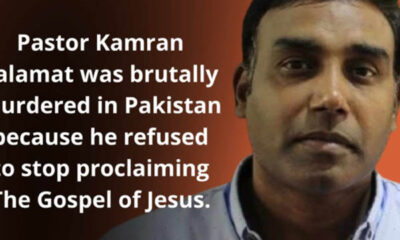
പാകിസ്ഥാനിൽ പാസ്റ്റർ കമ്രാൻ മൈക്കിൾ തന്റെ മകളുടെ മുന്നിൽ വെച്ച് ക്രൂരമായി കൊല്ലപ്പെട്ടു.
-

 Movie8 months ago
Worship Leader Brooke Ligertwood Shares Stunning Testimony of Answered Prayer From Ukraine