
world news
Pakistani Christians Remain on Edge Even as Blasphemy Cases Decline


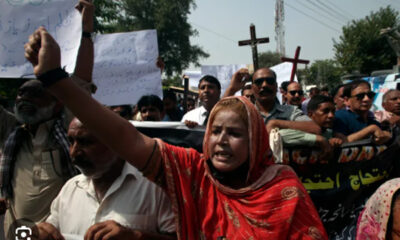
A mob of hundreds gathered outside a Christian family’s home in Karachi last month after blasphemy allegations began to spread, but the crowd dispersed after police intervened. An initial inquiry has since found the underlying allegation to be false.
According to Reuters, the four women and one child inside the home were spared partly because the organized fundamentalist groups that have historically led such riots were absent from the scene.
The incident reflects a sharp shift now underway across Pakistan. Registered blasphemy cases have fallen by roughly two-thirds this year, down to just 13 so far in 2026, according to the Human Rights Commission of Pakistan. Blasphemy-related riots and attacks, which averaged more than seven per year between 2021 and 2024, dropped to just one during the past 12 months, according to data from the Armed Conflict Location and Event Data project.
A Military-Led Crackdown
Reuters reported that the decline traces to a crackdown on hardline Islamist groups overseen by Pakistan’s army chief, Field Marshal Asim Munir. The largest target has been Tehreek-e-Labbaik Pakistan (TLP), long Pakistan’s most prominent blasphemy-focused movement, whose rallying cry was “Death to blasphemers.” TLP was banned in late 2025; its leaders have since been jailed, its mosques sealed, and its bank accounts frozen.
A government document supporting the ban, reviewed by Reuters, described TLP as having become “a serious threat to Pakistan” that harmed both internal peace and the country’s international standing. A TLP spokesperson referred to a prior statement calling the ban illegal and unconstitutional.
Reports suggest that the crackdown’s motivations were largely strategic rather than protective of religious minorities. Pakistani officials grew concerned that TLP’s hostility toward European nations was jeopardizing an EU duty waiver on which nearly a third of Pakistan’s exports depend.
Separately, the U.S. Commission on International Religious Freedom (USCIRF) recommended last year that Pakistan again be designated a Country of Particular Concern over its blasphemy laws, a designation Pakistan has decried. Analysts also pointed to Pakistan’s deteriorating relationship with the Afghan Taliban, once a military ally, as Islamabad increasingly blames Taliban-linked networks for fueling insurgencies in Balochistan and Khyber Pakhtunkhwa.
Talal Chaudhry, Pakistan’s minister of state for the interior, told Reuters that the government and military are aligned in cracking down on “any group that tries to hold the people or this country hostage to its dictates.”
A Law That Hasn’t Changed
Pakistan has recorded roughly 90 blasphemy-linked lynchings since 1990. Blasphemy remains punishable by death under Section 295-C of Pakistan’s penal code, and the law itself has not been amended or repealed as part of the current crackdown. What has shifted is the state’s tolerance for organized groups acting as enforcers of that law in the streets.
Christians, who make up roughly 2% of Pakistan’s population, have long faced a disproportionate share of blasphemy accusations relative to their numbers. The 2010 case of Asia Bibi remains among the most widely known: a Christian farm laborer sentenced to death after a workplace dispute over drinking water escalated into a blasphemy accusation. She spent eight years on death row before an international campaign led to her acquittal and exile.
Ihsan Ghani, Pakistan’s counter-terrorism chief during deadly TLP riots in 2017, told Reuters that a movement cultivated for years as a tool of state policy “cannot switch on, switch off,” warning it could re-emerge in force if TLP’s usefulness to the military changes again. Elizabeth Threlkeld, director of the Stimson Center’s South Asia program, raised a similar concern about whether Pakistan will sustain the crackdown at all.
Relief, But Not Certainty
For Pakistan’s Christian, Shi’ite, and Ahmadi communities, the change has been striking after decades in which suspects in blasphemy-related killings were sometimes publicly celebrated rather than prosecuted. The Christian woman whose family was targeted in Karachi last month told Reuters that she and her relatives are now physically safe. But, she said, the fear has not gone away.
Religious freedom advocates note that Pakistan’s response to international pressure has historically proven temporary, tied closely to trade access, diplomatic relationships, and terror-financing scrutiny, and vulnerable to reversal once those pressures ease. A drop in this year’s case numbers reflects a shift in enforcement priorities by Pakistan’s military leadership, not a change in the underlying legal framework that allows a single accusation to place a Christian’s life at risk.
Sustained international attention will be needed to determine whether this year’s decline in blasphemy violence outlasts the strategic circumstances that produced it. Pakistan’s blasphemy laws remain in force regardless of how few cases are filed under them, and advocates continue to call for their repeal, along with due process protections for the accused and accountability for the mob violence and impunity that have defined the law’s enforcement for decades.
Sources:persecution










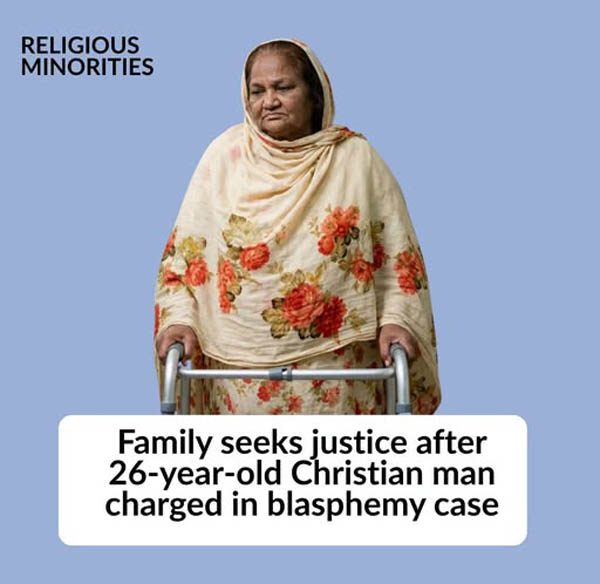
A 26-year-old Christian man, Samuel Arif, has been arrested and sent on judicial remand in Lahore after being accused of blasphemy.
The incident has again raised deep concerns among local rights activists and the Christian community regarding the misuse of blasphemy laws to settle personal grudges.
Arif previously lived with his family in Block A of the Punjab University Staff Colony, where they were allotted residence through his late father, Arif Masih, who worked there as a sanitary worker.
Following his father’s passing, the family relocated to Saint Mary’s Colony in Gulberg. However, Arif regularly returned to the staff colony to visit friends in the neighborhood where he had spent more than a decade of his life.
The police registered First Information Report (FIR) No. 806/26 under Sections 295-C and 298-A of the Pakistan Penal Code. Section 295-C carries a mandatory death penalty for derogatory remarks against the Prophet Muhammad, while Section 298-A addresses remarks against holy personages and companions.
According to the complainant, Muhammad Umair Alam Khan, a resident, Arif allegedly intercepted his two minor daughters in the colony. The complainant claimed that Arif used derogatory religious language, asserted that the prophet had appeared to him in a dream instructing him to marry the girls, and attempted to apply an unidentified substance to their faces.
Following the accusation, a crowd confronted Arif at a local gym inside the colony. The mob severely assaulted him before police intervened and took him into custody.
Weaponized Hate
Arif’s family strongly denied all allegations, maintaining that he is innocent and has been falsely framed due to personal enmity. Rights advocates note that blasphemy allegations in Pakistan are frequently weaponized during personal disputes, putting the accused and their families in immediate physical danger.
HARDS Pakistan (Human Assistance & Development Services), a non-governmental organization, is providing legal assistance to the family. At the same time, lawyers Kashif Alexander Rajput and Nadia Hameed have been appointed to represent Arif in court.
Human Rights Focus Pakistan (HRFP) and other advocacy organizations have called on provincial authorities to ensure a fair, transparent, and impartial investigation. They emphasized the need for due process, legal protection for the accused, witnesses, and family members, and accountability for those who take the law into their own hands.
As Arif remains in judicial custody, the Christian community continues to pray for his family and for justice, waiting for a thorough and unbiased investigation to reveal the truth.
Sources:persecution

A Chinese lawyer who helped defend the Zion Christian Church as the communist regime was persecuting it has left China under pressure from government authorities.
Ruth Wang has temporarily escaped to Taiwan and is seeking resettlement in another country, hoping for help from the U.S. or Canada. She said Chinese officials ordered the VDoor Law Firm to close.
As CBN News reported last October, 18 members of the Zion Church in China, including its founder, Pastor Ezra Jin, were arrested in one of China’s largest crackdowns on a single church in decades.
Wang’s legal team represented the pastor and others in October 2025, when security officials put them in prison.
Pastor Jin was eventually released, two months ago, and is now in the United States with family after President Donald Trump brought his case to his Chinese counterpart Xi Jinping during a meeting in May.
Nine other pastors have been freed, but eight remain in jail. And Wang’s plight further exposes how China has refused to stop pressuring the church and those affiliated with it, despite Jin’s release.
Zion Church is one of the largest unregistered churches in China, with scores of worship sites and more than 5,000 members. As an underground church, they utilize apartments, restaurants, and even karaoke bars in around 40 cities across China.
The regime has previously targeted the VDoor Law Firm. The license of the firm’s founder and Wang’s mentor, Zhang Kai, was revoked, and he was barred from leaving the country; other lawyers at their firm were suspended from practicing for six months, Wang said.
Wang was already out of the country, visiting Japan on vacation last month, when Chinese officials asked her to come and meet with them in Beijing. She chose not to return, fearing for her future.
Bob Fu, founder of ChinaAid, a nonprofit human rights organization based in the U.S., said Wang’s case shows how lawyers who dare to defend persecuted Christians are then targeted by the regime.
“Attorney Wang sought to fulfill the most basic responsibility of a lawyer,” he said. “Yet because her clients include detained leaders associated with Beijing Zion Church, she came to fear that she herself could become the next target.”
Fu urged Taiwan’s government to protect Wang’s family and ensure they would not be forcibly returned to mainland China. He also called on the U.S. and other democratic governments to help find a safe solution for her.
Taiwan won’t allow her to stay, saying it can’t accept cases of political asylum from mainland China because of tensions with the Chinese government. China claims Taiwan belongs to it, and has been working for years toward taking over the island country.
“Our family is currently facing an uncertain future, and we don’t know what will happen in the future, or whether there is anywhere that can accommodate us,” Wang told AP in an exclusive interview.
She pointed to the Bible account of Ruth, and how God sent Boaz to help when she Ruth also faced an uncertain future after moving to a new place. “I also believe that God will give (me) such a person,” Wang said.
Sources:CBN News
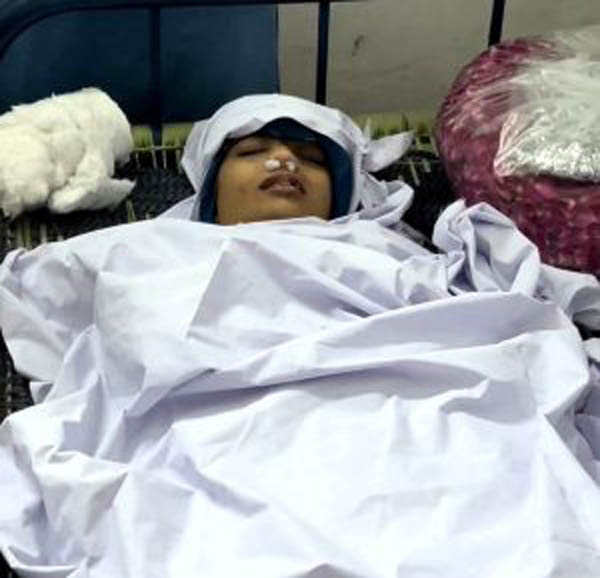
Pakistan – A married, 21-year-old Christian woman was shot dead inside her home in Rawalpindi last week by a Muslim neighbor whose advances she had rejected, reflecting an attitude among many Pakistan Muslims that crimes against Christians will go unpunished, sources said.
Saba Mehboob, who separated from her husband a year ago, was shot in the forehead at about 9 p.m. on Thursday (Sept. 3), after the alleged assailant, Adnan Butt, entered the house in Dhoke Ratta locality with a pistol, according to her brother, Joshua Mehboob. The suspect then abducted her teenage stepbrother and pressured him to falsely confess to the killing, according to the victim’s family.
Joshua Mehboob, a member of a local Full Gospel Assemblies church, said Butt accused his sister of dishonoring him before shooting her in front of her 16-year-old stepbrother, Anoosh.
“According to Anoosh, he and his paternal uncles, Michael and Nomi, were in a room when Butt suddenly entered with Saba, loudly abusing her,” Mehboob said. “He pointed his pistol at Michael and Nomi and ordered them to leave. He then slapped Saba repeatedly while shouting that she had dishonored him and been disloyal to him.”
Butt then shot Saba in the forehead, killing her instantly, Mehboob said.
Butt subsequently forced Anoosh outside at gunpoint, where another man was waiting on a motorcycle, according to Mehboob. The two men allegedly took the teenager to the home of Butt’s brother-in-law, where several other people were present.
Mehboob said the men threatened to kill Anoosh if he told police that Butt had killed his sister and pressured the adolescent to confess to the murder.
“Anoosh was kept in their custody until about 5 p.m. on Sept. 4,” Mehboob said. “Meanwhile, Butt also threatened Anoosh’s father and other family members with death if they registered a case against him.”
He said Anoosh was released after his father and uncles agreed not to file a police complaint.
After his release, Anoosh went with relatives to the district headquarters hospital to receive his sister’s body, Mehboob said. Police arrived there to record his statement and, after hearing his account, asked him to become the complainant in the case, he said. Police subsequently took Anoosh and his father into protective custody, according to Mehboob.
A First Information Report (FIR) was registered, but Butt later obtained pre-arrest bail from a court, he said.
Mehboob alleged that Butt had been harassing and threatening Saba Mehboob for some time. He said she twice had slapped him after he blocked her way in a market.
“I think Saba’s rejection fueled his anger, leading him to murder her,” he said.
Saba Mehboob’s killing prompted a protest in Dhoke Ratta, where Christian and Muslim residents reportedly called for Butt’s arrest.
Rawalpindi-based journalist Tariq Chaman said members of Saba Mehboob’s family and local residents alleged that police were pressuring Anoosh to accept responsibility for his sister’s death.
“Police have denied the allegations and said the teenage boy is being kept in custody for his protection,” Chaman said. “His father has also been kept with him because the boy is a minor.”
The family and local elders are demanding the release of Anoosh and his father and calling for the investigation to be transferred from Dhoke Ratta police station to a senior police officer, Chaman said. His sources indicated that additional circumstances surrounding the case could emerge as the investigation progresses and potentially affect the direction of the murder inquiry.
“Local sources have claimed that Butt and his family have criminal histories, and it’s possible that the victim’s family may succumb to their pressure at some stage,” Chaman said.
Human rights advocates have long raised concerns about the vulnerability of religious minorities in Pakistan, particularly in cases involving sexual violence, forced conversion and allegations of blasphemy. Rights groups have also documented cases in which victims or their families face intimidation and pressure to settle disputes outside the formal justice system.
Mehboob told Christian Daily International-Morning Star News that his sister was one of five children born to his mother from her first marriage to Mehboob Masih. After Masih died several years ago, their mother remarried Yaqoob Masih and had five more children with him, including Anoosh.
Saba Mehboob married Zeeshan Mehmood about six years ago, but she separated from him more than a year ago because of his severe drug addiction and moved back to live with their mother in Dhoke Ratta with her two daughters, Joshua Mehboob said.
Open Doors, a Christian organization that monitors persecution, ranked Pakistan eighth in its 2026 World Watch List of countries where Christians face the greatest difficulty. The organization cited systemic discrimination, mob violence, forced conversion and weaknesses in law enforcement among the factors contributing to risks faced by Christians in Pakistan.
Sources:christiannews



MTV Star Leaves Gay Lifestyle After Encounter With Jesus
Davis Mallory was once an MTV star who lived an openly gay lifestyle while simultaneously adhering to what he called...


അഞ്ചാമത് പെന്തക്കോസ്ത് മീഡിയ കോൺഫ്രൻസിന് അനുഗ്രഹീത സമാപനം.
കോട്ടയം : സത്യസന്ധതയും സമഗ്രതയുമാണ് ഒരു യഥാർത്ഥ മാധ്യമ പ്രവർത്തകൻ്റെ അടിസ്ഥാന ഗുണമെന്ന് മുൻ ചീഫ് സെക്രട്ടറിയും ഗ്രന്ഥകാരനുമായ ഡോ. ജിജി തോംസൺ ഐ എഎസ് പ്രസ്താവിച്ചു.ലോകമെങ്ങുമുള്ള...


ഇന്ത്യൻ ക്രിസ്റ്റ്യൻ ഡേ സമ്മേളനം സെപ്റ്റംബർ 19 വൈകിട്ട് 5 മണിക്ക് ഇർവിംഗ് സിറ്റിയിൽ
ഡാളസ് : ഇന്ത്യൻ ക്രിസ്റ്റ്യൻ ഡേ സമ്മേളനം ഇർവിംഗ് സിറ്റിയിൽ സെപ്റ്റംബർ19 ശനിയാഴ്വ വൈകുന്നേരം 5 മണിക്ക് ബെഥനി ഫുൾ ഗോസ്പൽ അസംബ്ളി ഹാളിലാണ് ആരംഭിയ്ക്കുന്നത്. സമ്മേളനത്തിൽ...


ഐപിസി വെമ്പായം സെൻ്റർ സണ്ടേസ്കൂൾ താലന്തു പരിശോധന സെപ്റ്റംബർ. 21-തിങ്കളാഴ്ച രാവിലെ 9 ന്
തിരുവനന്തപുരം: ഐപിസി വെമ്പായം സെൻ്റർ സൺഡേസ്കൂൾ അസോസിയേഷന്റെ ആഭിമുഖ്യത്തിൽ നടത്തുന്ന ഈ വർഷത്തെ താലന്തു പരിശോധന സെപ്റ്റംബർ. 21 തിങ്കളാഴ്ച രാവിലെ 9 മണി മുതൽ നാലാഞ്ചിറ...


കോർക്ക് ഏബേനസർ ദൈവസഭയിൽ സെപ്റ്റംബർ 19 ശനിയാഴ്ച ഏകദിന യുവജന ക്യാമ്പ്
അയർലൻഡ്: ഏകദിന യുവജന ക്യാമ്പ്: കോർക്ക് ഏബേനസർ ദൈവസഭയുടെ ആഭിമുഖ്യത്തിൽ എറൈസ് & ഇഗ്നൈറ്റ്’ എന്ന വിഷയത്തെ ആസ്പതമാക്കി ഏകദിന യുവജന ക്യാമ്പ്, 2026 സെപ്റ്റംബർ 19...


Theologian Uncovers Dangerous ‘Common Sense’ Hidden in Kids’ Movies Today
Very often, the truth is hiding in plain sight. That’s certainly the case with much of children’s entertainment. The underlying...
-

 Movie12 months ago
Forrest Frank Posts Blunt Response After Losing 30,000 Followers Over Charlie Kirk Post
-

 Sports12 months ago
‘Nothing Short of Revival’: Athletes at University of Pittsburgh Draw 600 with Gospel Outreach
-

 Movie11 months ago
Forrest Frank Says He Will No Longer Participate in Awards Shows, Shares ‘Conviction’ Behind Why
-

 us news12 months ago
‘Nothing Short of a Move of God’: Nearly 5,000 Decisions for Christ at Recent ‘Life Surge’ Events
-

 us news4 months ago
‘America Is Hungry’: Hundreds Born Again and Baptized as Jesus Tent Revival Sweeps the Nation
-

 Movie12 months ago
‘Malcolm in the Middle’ Star Frankie Muniz Declares He’s ‘Proud’ to ‘Live for Jesus’
-

 Movie10 months ago
CBN’s Superbook Launches New Free Bible App for Kids: ‘The Power of God Is Released’
-

 world news11 months ago
Nigerian Pastor Killed in Kwara State After Ransom Payments Made