
us news
A Biblical Focus on Persecution

Recently, International Christian Concern (ICC) released a report on religious liberty in Morocco.
According to that report, three areas of persecution still restrict freedom for Christians and minorities there:
“Freedom of Religion in Morocco identifies three major areas of concern: the enforcement of Ramadan, restrictions on religious conversion from Islam, and burial practices. It also shows how Islam is constitutionally privileged, and how other provisions limit religious dissent.”
Mention of the report belongs here not on account of its novelty, but rather on account of the ubiquitous nature of such occurrences. Allured by promises of Western trade, formation of economic alliances, and the signing of prosperous treaties, nations around the world have regularly adopted the language of human rights and religious freedom, while leaving the devil to appear in the details.
For more than three-fourths of a century, the concept of human rights has been promoted, accepted, and even encouraged around the world. This remarkable accomplishment was achieved in part by First Lady Eleanor Roosevelt, who led a coalition of world leaders to adopt a U.N. Declaration on the matter. Since then, human rights language has shone into this dark world as a beacon of hope radiating outward from the Palais de Chaillot in Paris, France, where the declaration was signed in December of 1948.
No doubt, this work by Roosevelt and others has had a positive effect during these 75 years. Encouraged by the success, the U.N. adopted another declaration 33 years later. Much less known — yet even more ambitious — the Declaration on the Elimination of All Forms of Intolerance or Discrimination on the Basis of Religion or Belief was launched in November 1981 with the hope of eradicating religious violence altogether.
Of course, religious violence has not been eradicated — and might be increasing. Human rights are not guaranteed worldwide. Yet these declarations — these meta-level enterprises for good will — ought to be enjoined by Christians and advocates of good will. They probably serve a role more important than most policymakers realize.
The overall impact of such initiatives proves good in the way that locks prove good on doors. While bad actors will break the locks, honest people will likely honor them and be deterred from evil. Locks make a statement. Declarations of human rights make a statement. They put a word of righteousness in the air.
As noted above, ICC applauds efforts like these to broaden religious liberty. Christian organizations like ICC should continue to serve as cheerleaders for broader efforts for religious liberty. ICC rightly decries forms of religious intolerance. And ICC partners with important institutions like the USCIRF, IRF, and the U.N. Special Rapporteur on Freedom of Religion or Belief.
And yet, ICC doesn’t aim for such declarations and organizations to complete its work. Organizations like ICC must always narrow their beams to focus back on the persecution of Christians — for reasons noted in the report from Morocco.
Politically and constitutionally, Christians have religious liberty in Morocco. Realistically, persecution still takes place to one degree or another. The fight for religious liberty won’t always overlap precisely with ministry to and advocacy for persecuted Christians. Therefore, the focus on persecution cannot be surrendered, even while cooperation on declarations might be enjoined.
In the mid-to-late-20th century, popular theologian Francis Schaeffer began using the phrase “cobelligerents” for situations such as this. In his little book titled “The Church Before the Watching World,” Schaeffer provided a distinction between a political ally and a political cobelligerent.
In the latter case, the cobelligerent doesn’t align himself with any aim of his political partner outside of the narrow, usually singular issue of their cobelligerence. Christians might work together with Moroccan Muslims to guarantee religious liberty in their constitution but not align themselves with economic, military, or trade interests.
The concept is simple. Each party maintains focus on its self-interest while cooperating toward a common, agreeable outcome on an issue of mutual interest. Evangelicals surfed Schaeffer’s concept of cobelligerence through many waves of conservative and liberal tides — trying not to align completely, while still building momentum toward the right outcome. And so, advocates for religious liberty will be cobelligerents with advocates for the persecuted — and vice versa.
But there are many reasons for organizations like ICC to remain laser-focused on persecution as the baseline concern. Here again, the work of ICC in Morocco illuminates the point. How many cameras, reporters, newsreels, and onlookers covered Eleanor Roosevelt at the Palais de Chaillot in Paris? And how many covered the release of the report from ICC and the Regent University Center for Global Justice? Each event mattered.
For the Christian, persecution support looms large throughout the New Testament as a first-order priority. As ICC has noted before, the very design of Christian Sunday offerings came about to serve the needs of suffering saints. The Apostle Paul devoted enormous energy in his missionary journeys collecting for Christians in need.
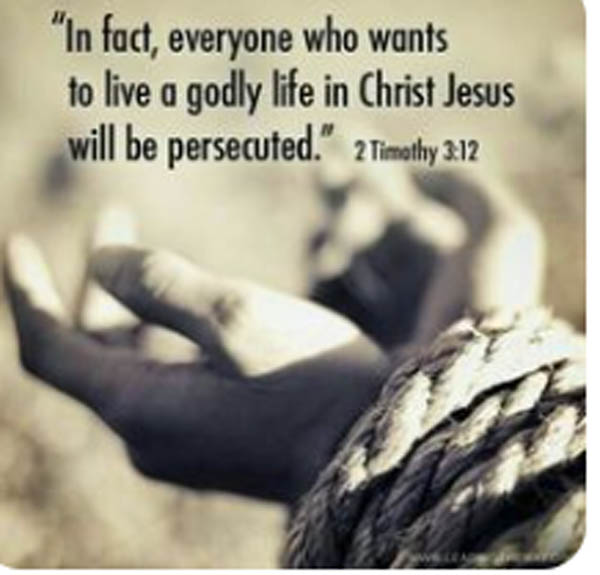
No stranger to persecution, Paul expected persecution to be part of the Christian experience on earth. As he wrote to his disciple Timothy late in life, “Indeed, all who desire to live a godly life in Christ Jesus will be persecuted, while evil people and impostors will go on from bad to worse, deceiving and being deceived” (2 Tim. 3:12-13, ESV).
To the Colossians, Paul made it sound as though time itself were a mere stage on which persecution would be worked out in the lives of faithful saints:
“Now I rejoice in my sufferings for your sake, and in my flesh I am filling up what is lacking in Christ’s afflictions for the sake of his body, that is, the church, of which I became a minister according to the stewardship from God that was given to me for you, to make the word of God fully known, the mystery hidden for ages and generations but now revealed to his saints” (Colossians 1:24-26, ESV).
The sufferings in view in this passage do not reference Christ’s atonement. In Romans 3 and elsewhere, both Paul and other New Testament writers make plain that Christ’s sacrificial atonement was complete as a penal substitution for his people. Rather, as Paul notes in the verses, the suffering is Christ’s continuing presence on earth through his church. Missionaries, pastors, servants in hostile places continue to absorb the afflictions of hostility against Christ himself. (See Acts 9 for a personal retelling of how Paul learned this lesson from Christ — as the Lord makes plain that Paul is persecuting him when he persecutes the church.)
The Book of Revelation shares a similar perspective with Paul. In the altar scene of Revelation 6:9, the martyred saints — those beheaded for their faith — cry out, “With a loud voice, ‘O Sovereign Lord, holy and true, how long before you will judge and avenge our blood on those who dwell on the earth?’” The Lord’s reply marks the time: “They were each given a white robe and told to rest a little longer, until the number of their fellow servants and their brothers should be complete, who were to be killed as they themselves had been” (Revelation 6:12, ESV). Time displays the persecution Christ’s church will suffer.
The writers of the New Testament seem to think that this space-time arena we humans inhabit exists for nothing short of the display of Christ’s redemption — as though everything in creation were created by Christ and for his glorious purposes.
His redemptive work guarantees his triumphant return for his saints, as Revelation states (19:6-8, ESV),
“Then I heard what seemed to be the voice of a great multitude, like the roar of many waters and like the sound of mighty peals of thunder, crying out,
“Hallelujah!
For the Lord our God
the Almighty reigns.
Let us rejoice and exult
and give him the glory,
for the marriage of the Lamb has come,
and his Bride has made herself ready;
it was granted her to clothe herself
with fine linen, bright and pure” —
for the fine linen is the righteous deeds of the saints.”
The steadfast, covenant love of Christ will secure victory for the righteous and, equally important, justice for the wicked. The same Lamb who invites his followers to his feast will prove a terror to the wicked, as Revelation 6:15 says,
“[the powerful persecutors and privileged authorities] hid themselves in the caves and among the rocks of the mountains, calling to the mountains and rocks, ‘Fall on us and hide us from the face of him who is seated on the throne, and from the wrath of the Lamb, for the great day of their wrath has come, and who can stand?’”
Same Lamb. Very different redemptive results.
Persecution is neither rare nor casually addressed in the Christian scriptures. It reflects the reality that Christ claims kingship authority. In his kingship authority, Christ claims that he alone fulfills the righteousness of God. Hostile authorities — like King Herod during the birth of Christ — wield the power of fear and death to at least downplay if not outrightly defy the righteous authority of Christ. Persecution is an assault on Christ. Where Christ’s people are suffering for his righteousness, they are at the same time displaying his redemptive work. According to Revelation, Christ will complete this redemptive work with a perfect mix of covenant love (for his saints) and righteous judgment (for the persecutors).
The point of focused persecution organizations is like the point of a Declaration of Human Rights: the word gets into the air because it reflects something real — even if that reality is not fully embraced.
Christians are and ought to be cobilligerents in a vast array of good works designed to help human beings thrive on earth as God intended. Nevertheless, the priorities of nations and news organizations won’t sense the significance of a father in Nigeria crying out as David did in Psalm 13, “How Long, O Lord!” The New Testament assures the saints that Christ hears such cries, takes them to heart, and will make them right.
When persecutors attack the saints, they attack Christ himself. When advocates love the saints, we’re loving Christ so the world will know.
Sources:persecution







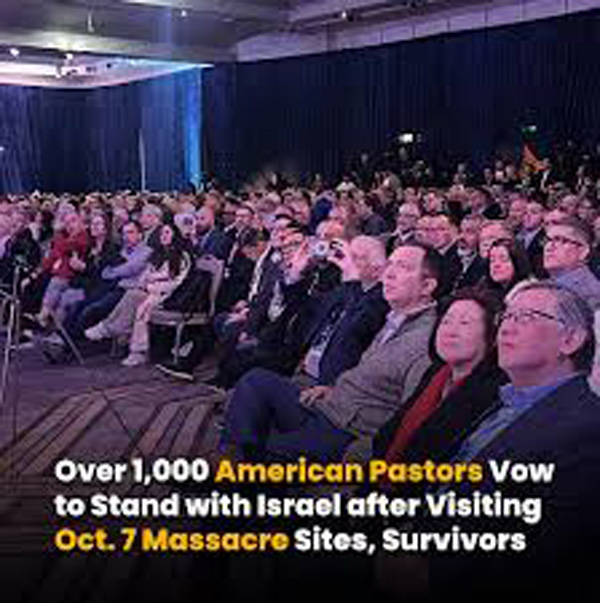
More than 1,000 Christian leaders, community leaders and influencers from 117 countries are arriving in Israel to stand with Oct. 7 survivors, visit massacre sites and carry their testimonies home, Israel365 News reported. (Screengrab image: via Charisma News /Wikimedia Commons)
The Friends of Zion Ambassador Summit, organized in cooperation with Israel’s Foreign Ministry, includes approximately 200 young adults ages 18-29. Participants will meet released hostages, bereaved families, wounded soldiers and Holocaust survivors.
“We want these young leaders to see Israel for themselves, hear directly from those whose lives were changed forever on October 7, and return home with a deeper understanding of Israel and a commitment to standing with the Jewish people,” Friends of Zion founder Mike Evans said, according to Israel365 News.
On Oct. 7, following a visit to Yad Vashem, the delegation will join approximately 2,000 participants at the Southern Wall of the Temple Mount. Released hostages will appear onstage during the anniversary gathering, which organizers say will be broadcast live on dozens of television networks.
The commemoration marks three years since Hamas terrorists killed approximately 1,200 people and took 251 hostages into Gaza.
On Oct. 8, participants will visit the Nova music festival massacre site near Re’im. Released hostages Romi Gonen, Noa Argamani and Elkana Bohbot will meet the delegation and receive the Friends of Zion “Here Am I” Award for their international advocacy.
The delegation also plans to visit ancient Shiloh, where the Tabernacle stood and Samuel heard God’s call.
“The arrival of more than 1,000 Christian leaders from 117 countries carries a powerful message: Israel does not stand alone,” said George Deek, Israel’s special envoy to the Christian world.
“They are coming to bear witness, to meet the people whose lives were shattered on October 7, and to carry their stories back to communities across the world,” Deek said.
Sources: Breaking Christian News
Father, we pray pastors would be bold this election season. Inspire these shepherds to engage politically, to encourage their congregations to do the same, and, most importantly, to refuse the temptation to stay silent.
There are moments when silence carries consequences. I believe the American Church is living in one of those moments right now.
For too many years, Christians were told that faithful citizenship and Biblical engagement with government were somehow outside the proper boundaries of the Church. Pastors were warned away from subjects that might be considered “political.” Congregations learned to separate what happened on Sunday morning from what happened at the ballot box.
And while much of the Church stepped away, our culture did not stand still. The government continued making decisions about human life, marriage, sexuality, children, parental authority, religious liberty, education, justice, and freedom. Policies were enacted. Institutions changed. Cultural assumptions shifted.
We should not be surprised that when Christians remove their voices from the public square, Biblical principles have less influence there. It is time to put our voices back in.
Pastor, Your Voice Matters
I am speaking especially to pastors of every-sized congregation. Whether you shepherd 75 people, 200 people, or 2,000, your voice matters. You do not need a national platform. God has already given you one: your pulpit.
Your congregation contains parents, grandparents, teachers, business owners, community leaders, young adults, and voters. They are making decisions that will help determine who writes our laws and what principles guide our communities. Equip them. Teach them what Scripture says about life, family, sexuality, justice, government, authority, freedom, and responsibility. Teach them to pray for those in authority, to understand the issues confronting our nation, and to evaluate public questions through Scripture rather than social media, political advertising, or cultural pressure.
And teach them that voting is not disconnected from their Christian lives. Our involvement in elections is important because we are citizens, but for Christians, there is something more. We carry Biblical convictions into every sphere God places us, including the public square.
Recently in Virginia, pastors were invited to add their voice to a public letter going to the Virginia legislature speaking against the liberal majority’s desire to enshrine abortion in our state Constitution. Across the state do you know how many pastors were willing to sign this letter? About 20. Only 20 pastors were willing to publicly put a stake in the ground to stand for the Constitutional protection of life to the Virginia Legislature.
We Gave Up Ground
For generations, American Christians benefited from a culture deeply influenced by Biblical principles. But somewhere along the way, many Believers began assuming those principles would remain embedded in the nation whether Christians actively defended them or not.
They did not.
We withdrew, others stepped forward, and America changed. We cannot spend decades removing Biblical voices from government, education, culture, and civic life and then wonder why those institutions increasingly reflect values contrary to Scripture. This is not a moment for Christians to retreat further. It is a moment to reengage.
The Pulpit Once Helped Shape America
This would not have seemed unusual to many pastors in America’s founding era. Clergy preached about liberty, government, moral responsibility, and the great public questions confronting their generation. Ministers served as chaplains, wrote pamphlets, participated in legislatures and constitutional conventions, and helped form the moral understanding of the people who were building a nation.
The American pulpit helped form the American conscience. We need courageous pulpits again.
Southern Baptist Convention President Willy Rice recently issued a remarkably simple challenge:
“I think the pastors need to step up.”
He is right. Many of the questions confronting America are not merely political questions. They are questions about what it means to be human, what human life is worth, what marriage is, what responsibilities parents possess, what freedom means, what government may rightfully do, and where authority ultimately comes from.
Those are profoundly Biblical questions. Pastors should not surrender them because politicians are debating them.
Prayer Must Move Us to Action
At Intercessors for America, we believe deeply in prayer. But Biblical prayer does not train us to become passive spectators. Nehemiah prayed and then approached the king. Esther fasted and then walked into the king’s presence. Daniel prayed and faithfully represented God’s truth inside the government of Babylon. The apostles prayed and then went out and spoke boldly.
Prayer prepares God’s people for obedience and action. We cannot pray for righteous government and then ignore the opportunity we have to participate in choosing those who govern. We cannot pray for the protection of children and remain uninformed about policies affecting them. We cannot pray for religious liberty and then neglect elections in which those freedoms are affected. Prayer should sharpen our discernment and move us toward faithful action.
Pastors, Lead
This is my appeal to America’s pastors: preach Biblical truth boldly and teach your congregation how Scripture applies to the issues confronting our nation. Talk about the sanctity of human life, marriage and family, children and parental responsibility, religious liberty, justice, government, and the responsibilities of citizenship.
Help people register to vote. Make sure they know when elections are taking place. Encourage them to research candidates, their records, their stated positions, and the policies they support. Urge them to pray for discernment and to carry their Biblical convictions with them when they vote. Do not assume someone else will do it. You are the shepherd God has placed before your congregation. Lead.
Christians, Show Up
And to Christians sitting in America’s pews, I would say this: we need to show up. We need to pray and then take the time to learn what is happening in our communities, our states, and our nation. We need to understand the issues, examine the records and positions of those seeking office, seek God for discernment, and vote according to Biblical conviction.
But our responsibility does not end when we leave the voting booth. Christians should be willing to speak up, contact elected officials, serve in their communities, attend school board and local government meetings, and encourage Believers with wisdom and courage to consider public service. We should teach our children and grandchildren that citizenship is a stewardship, not a spectator sport. If Christians continually surrender their place in the public square, we should not be surprised when the vacuum is filled by values radically different from our own.
The Consequences Will Outlive Us
We are making decisions today whose consequences our children and grandchildren may live with for generations. Some political decisions can be reversed in the next election. Others become embedded in law, education, government bureaucracies, institutions, and eventually the thinking of an entire generation. Once that happens, recovering what has been lost can take decades.
That is why I believe this moment demands more from the Church than concern. It demands prayer that leads to discernment, courage, engagement, and action. Our very existence as the nation we have known is at stake, and I do not believe that is an overstatement. A nation can drift so far from its foundational principles that recovering them becomes the work of generations—if they can be recovered at all.
Christians cannot control every outcome, but we are responsible for what God has placed in our hands. We have a voice and the freedom to use it. We have influence in our families, churches, communities, and government. We have the privilege of bringing our petitions before God in prayer. And in America, we have been entrusted with a vote.
It is time to use all of them.
We Have Been at a Crossroads Before
The film “A Great Awakening” offers a powerful reminder that America has faced moments before when our future seemed uncertain and human wisdom appeared insufficient. The film depicts the remarkable relationship between evangelist George Whitefield and Benjamin Franklin and ultimately brings us to an extraordinary moment in 1787, when delegates to the Constitutional Convention were struggling to agree upon the framework of our new government.
The delegates had been meeting for weeks. They were deeply divided over representation and the structure of the government they were attempting to create. Progress had slowed, frustrations were mounting, and the future of the Convention was uncertain.
It was into that atmosphere that the 81-year-old Benjamin Franklin rose to speak.
The scene portrayed in “A Great Awakening” is not simply a filmmaker’s invention. Franklin’s address was recorded in James Madison’s notes of the Constitutional Convention. Franklin reminded the delegates that during the struggle for independence, when the young nation faced seemingly impossible circumstances, they had repeatedly sought God together in prayer.
Then he asked a question that should speak to America today:
“And have we now forgotten that powerful Friend? Or do we imagine that we no longer need His assistance?”
Franklin continued:
“The longer I live, the more convincing proofs I see of this truth—that God governs in the affairs of men.”
Franklin then invoked the truth expressed in Psalm 127—that unless the Lord builds the house, those who build it labor in vain. His message to those delegates was unmistakable. They possessed extraordinary intelligence, education, political experience, and some of the greatest minds of their generation, but human wisdom alone would not be enough to secure the future of the nation they were attempting to build.
Think about that moment.
These men were wrestling with whether this unprecedented experiment in self-government could survive. Yet in the midst of their deliberations, Franklin stood before them and acknowledged their dependence upon God.
I believe America has arrived at another such crossroads.
We cannot simply look to Washington, political parties, candidates, elections, courts, or human strategies to rescue our nation. We desperately need God. But seeking God has never meant withdrawing from the responsibilities He has placed before us. Franklin called those delegates to prayer in the very room where they were actively wrestling with the practical work of building a government.
That is the combination the Church needs to recover: dependence upon God coupled with faithful action.
Pastors, this is your moment to help awaken the Church. Teach your people to pray, but also teach them to stand. Help them understand what is happening in our nation and what Scripture says about it. Equip them to examine candidates and policies through the lens of Biblical truth, to participate in government, to speak when Biblical values are threatened, and to faithfully exercise the vote entrusted to them.
And Christians, do not leave the future of this nation entirely in someone else’s hands. Seek God. Know His Word. Understand the issues. Examine those who seek authority over you. Carry your Biblical convictions into the voting booth and into every other place where God has given you influence.
Nearly 240 years ago, when America’s founders found themselves struggling to determine the future of a young nation, Franklin asked them a question that reaches across the centuries:
“And have we now forgotten that powerful Friend?”
May our answer be no.
May the Church remember its responsibility. May pastors recover their voices. May Christians recover the understanding that our citizenship is a stewardship. May we seek God fervently for our nation and then have the courage to act upon the responsibilities He has placed before us.
We have prayed. We must continue to pray. But this is also a time to stand, speak, engage, and vote.
Perhaps what America needs at this critical crossroads is exactly what the title of the film suggests: A great awakening.
Sources: Breaking Christian News
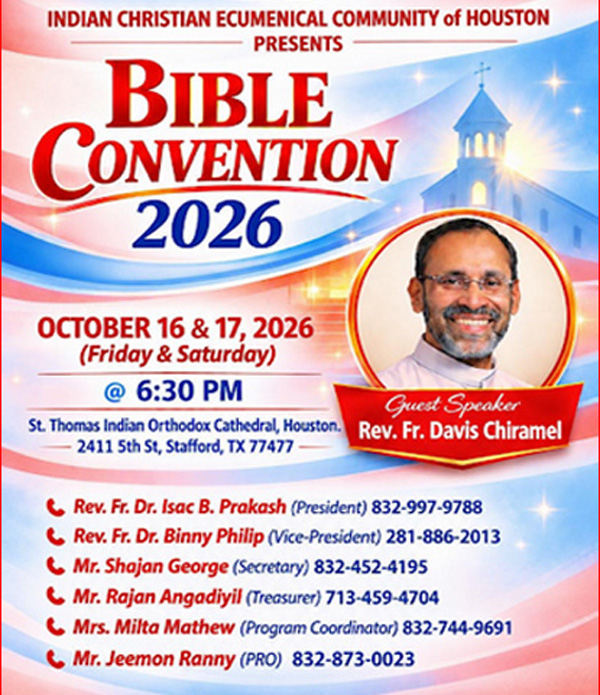
ഹൂസ്റ്റൺ: ഇന്ത്യൻ ക്രിസ്ത്യൻ എക്യുമെനിക്കൽ കമ്മ്യൂണിറ്റി ഓഫ് ഹൂസ്റ്റണിന്റെ (ICECH) ആഭിമുഖ്യത്തിൽ 2026 ബൈബിൾ കൺവെൻഷൻ ഒക്ടോബർ 16, 17 തീയതികളിൽ (വെള്ളി, ശനി) വൈകുന്നേരം 6.30ന് ഗാനശുശ്രൂഷയോടു കൂടി ആരംഭിക്കും.
കൺവെൻഷൻ ഗായകസംഘം ഗാനശുശ്രൂഷയ്ക്കു നേതൃത്വം നൽകും.
ഹൂസ്റ്റണിലെ സെന്റ് തോമസ് ഇന്ത്യൻ ഓർത്തഡോക്സ് കത്തീഡ്രലിൽ (2411 5th St., Stafford, TX 77477) നടക്കുന്ന കൺവെൻഷനിൽ പ്രസിദ്ധ കൺവെൻഷൻ പ്രസംഗകൻ റവ. ഫാ. ഡേവിസ് ചിറമേൽ മുഖ്യ പ്രഭാഷകനായിരിക്കും.
സാമൂഹിക സേവന രംഗത്തെ ശ്രദ്ധേയമായ പ്രവർത്തനങ്ങളിലൂടെ അന്തർദേശീയ തലത്തിൽ ശ്രദ്ധ നേടിയിട്ടുള്ള ഫാ. ഡേവിസ് ചിറമേൽ കിഡ്നി ഫെഡറേഷൻ ഓഫ് ഇന്ത്യയുടെയും Accident Care and Transport Service (ACTS)-ന്റെയും സ്ഥാപകനാണ്. വൃക്കരോഗികൾക്ക് ചികിത്സാ സഹായം, ഡയാലിസിസ്, വൃക്കദാന ബോധവൽക്കരണം തുടങ്ങിയ പ്രവർത്തനങ്ങൾക്കായി കിഡ്നി ഫെഡറേഷൻ ഓഫ് ഇന്ത്യ പ്രവർത്തിച്ചുവരുന്നു.
2009-ൽ അപരിചിതനായ ഒരാൾക്ക് തന്റെ ഒരു വൃക്ക ദാനം ചെയ്തതിലൂടെയാണ് ഫാ. ഡേവിസ് ചിറമേൽ വൃക്കദാന ബോധവൽക്കരണ രംഗത്ത് ശ്രദ്ധേയനായത്. തുടർന്ന് നിരവധി സാമൂഹിക ക്ഷേമ, ജീവകാരുണ്യ പദ്ധതികൾക്കും അദ്ദേഹം നേതൃത്വം നൽകി.
ICECH പ്രസിഡന്റ് റവ. ഫാ. ഡോ. ഐസക് ബി. പ്രകാശ്, വൈസ് പ്രസിഡന്റ് റവ. ഫാ. ഡോ. ബിന്നി ഫിലിപ്പ്, സെക്രട്ടറി ഷാജൻ ജോർജ്, ട്രഷറർ രാജൻ അങ്ങാടിയിൽ, പ്രോഗ്രാം കോർഡിനേറ്റർ മിൽറ്റാ മാത്യു, ഗായകസംഘം കൺവീനർ ഡോ. അന്ന. കെ ഫിലിപ്പ് തുടങ്ങിയവരുടെ നേതൃത്തിൽ വിവിധ കമ്മിറ്റികൾ കൺവെൻഷന്റെ വിജയത്തിനായി പ്രവർത്തിച്ചു വരുന്നു.
ജാതിമത ഭേദമെന്യേ കൺവെൻഷനിൽ പങ്കെടുത്ത് അനുഗ്രഹം പ്രാപിക്കുന്നതിന് ഏവരെയും സ്വാഗതം ചെയ്യുന്നുവെന്ന് സംഘാടകർ അറിയിച്ചു.
Sources:globalindiannews



1,000 Christian Leaders Gather in Israel to Honor Oct 7 Victims, Stand With Survivors
More than 1,000 Christian leaders, community leaders and influencers from 117 countries are arriving in Israel to stand with Oct....


Christian Believers, Pastors, America Needs Your Biblical Voice
Father, we pray pastors would be bold this election season. Inspire these shepherds to engage politically, to encourage their congregations...
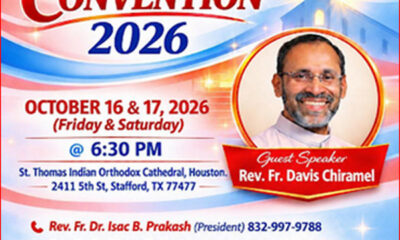

ഹൂസ്റ്റണിൽ എക്യുമെനിക്കൽ ബൈബിൾ കൺവെൻഷൻ ഒക്ടോബർ 16, 17 തീയതികളിൽ
ഹൂസ്റ്റൺ: ഇന്ത്യൻ ക്രിസ്ത്യൻ എക്യുമെനിക്കൽ കമ്മ്യൂണിറ്റി ഓഫ് ഹൂസ്റ്റണിന്റെ (ICECH) ആഭിമുഖ്യത്തിൽ 2026 ബൈബിൾ കൺവെൻഷൻ ഒക്ടോബർ 16, 17 തീയതികളിൽ (വെള്ളി, ശനി) വൈകുന്നേരം 6.30ന്...

നടൻ നാനാ പടേക്കർ അന്തരിച്ചു, ഹൃദയാഘാതത്തെ തുടർന്ന് അന്ത്യം
ചലച്ചിത്രകാരൻ നാനാ പടേക്കർ അന്തരിച്ചു. 75 വയസായിരുന്നു. ഗോവയിലെ വീട്ടിൽ വച്ച് ഹൃദയാഘാതത്തെ തുടർന്നാണ് അന്ത്യം. 3 തവണ ദേശീയ പുരസ്കാരം നേടിയ ചലച്ചിത്രകാരനാണ് നാനാ പടേക്കര്....

നൈജീരിയയിൽ ഈ വർഷം 4216 ക്രൈസ്തവര് കൊല്ലപ്പെട്ടതായി യുഎസ് സന്നദ്ധ സംഘടനയുടെ റിപ്പോര്ട്ട്
അബൂജ: നൈജീരിയയിൽ ക്രൈസ്തവ ജനവിഭാഗങ്ങൾക്ക് നേരെയുള്ള അക്രമങ്ങളും പീഡനങ്ങളും അതിരൂക്ഷമായി തുടരുന്നതായി സ്ഥിരീകരിച്ച് റിപ്പോർട്ട്. ഈ വർഷം ജനുവരി 1 മുതൽ സെപ്റ്റംബർ 8 വരെയുള്ള കാലയളവിൽ...


Jim Bakker, Televangelist and PTL Founder, Dies at 86, Wife Lori Bakker Announces
Televangelist Jim Bakker, a longtime Christian broadcaster and founder of the PTL television ministry, has died at 86, according to...
-

 Movie12 months ago
Forrest Frank Says He Will No Longer Participate in Awards Shows, Shares ‘Conviction’ Behind Why
-

 Movie12 months ago
Brandon Lake sweeps 2025 Dove Awards, brings down the house alongside Jelly Roll with ‘Hard Fought Hallelujah’
-
 us news4 months ago
‘America Is Hungry’: Hundreds Born Again and Baptized as Jesus Tent Revival Sweeps the Nation
-

 us news4 months ago
Mike Winger deletes YouVersion app over ‘The Passion Translation’ controversy, urges others to ‘use caution’
-

 Movie11 months ago
CBN’s Superbook Launches New Free Bible App for Kids: ‘The Power of God Is Released’
-

 Movie8 months ago
Hollywood Actor Jen Lilley Launching New Ministry After ‘Vision’ From Holy Spirit
-

 Sports12 months ago
Jaguars Star Travis Hunter, Olympic Gold Medalist Noah Lyles Get Baptized: ‘Leaving My Old Self’
-

 us news12 months ago
നൈജീരിയൻ ക്രൈസ്തവരെ സംരക്ഷിക്കാൻ നടപടി ആവശ്യപ്പെട്ട് യുഎസ് കോണ്ഗ്രസ് പ്രതിനിധികള്